
You are at the bakery. You order a broodje. The baker says something you don't catch. You smile, nod, and walk away with your bread and a vague sense of failure. Sound familiar?
Dutch small talk is not small. It is a social contract. It is how people signal that you are safe, that you belong, that you are not just a transaction. And for many learners, it is the hardest part of the language because it seems to have no content. It is all filler, all weather, all 'ja, hè?' and 'nou, ja'.
But here is the secret: Dutch small talk is not about information. It is about rhythm. It is about showing up in the conversation, even if you have nothing to say. And once you understand the patterns, you can participate without feeling like a fraud.
The three pillars of Dutch small talk
Dutch small talk rests on three pillars: the weather, the schedule, and the shared complaint. These are not random. They are safe topics that allow people to connect without vulnerability. They are the social equivalent of a handshake.
1. The weather. Yes, it is cliché. But Dutch weather is genuinely unpredictable, and commenting on it is a way of saying 'we are in this together'. You don't need to be creative. You just need to be present. 'Het is weer eens typisch Nederlands weer, hè?' (It's typical Dutch weather again, isn't it?) is a perfectly acceptable opener. The key is the tag question: hè. It invites agreement. It says 'I am not lecturing you, I am checking in'.
2. The schedule. Dutch people love to talk about what is coming next. 'Druk?' (Busy?) is a complete conversation starter. It acknowledges that life is full and that you are both managing it. You can answer with 'Ja, het loopt wel door' (Yes, it keeps going) or 'Valt mee, jij?' (Not too bad, you?). This is not intrusive. It is a way of saying 'I see you are a person with a life'.
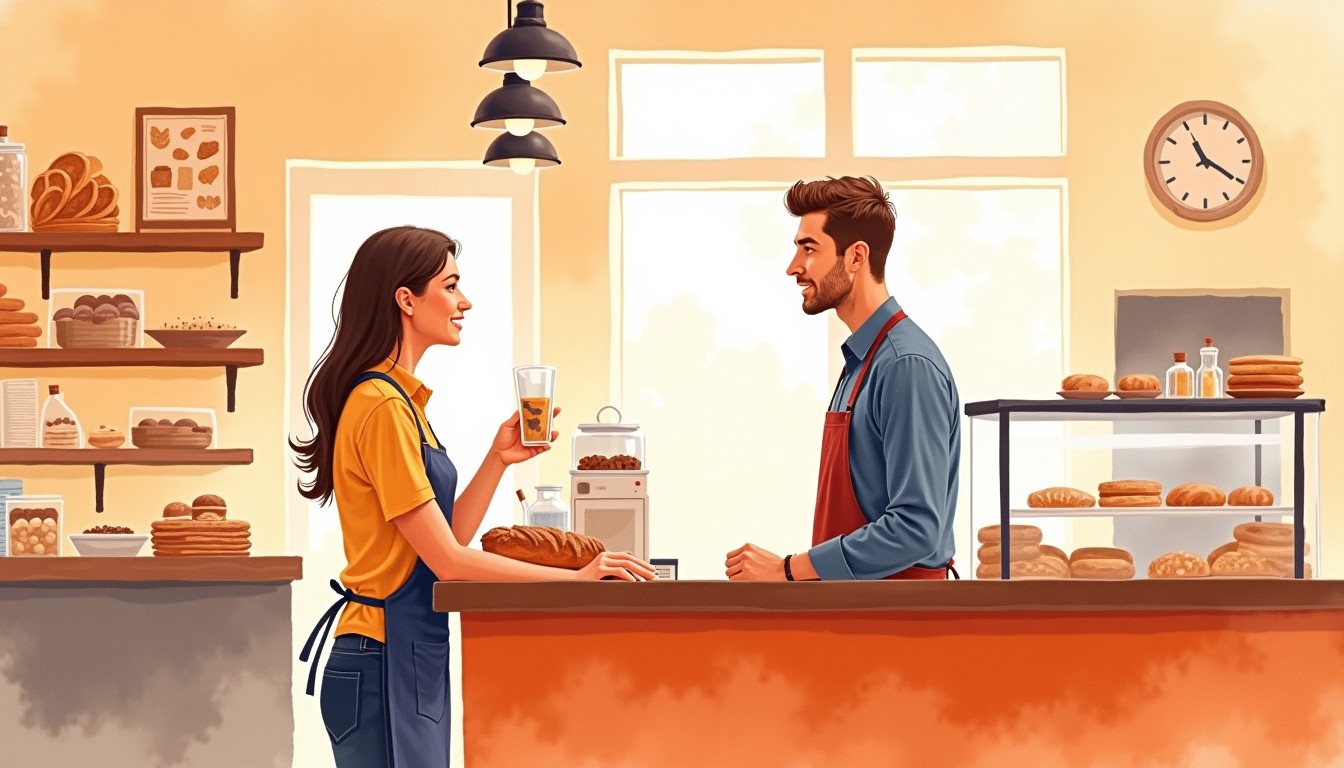
3. The shared complaint. This is where Dutch small talk becomes an art. Complaining about the train, the weather, the government, the price of coffee: these are bonding rituals. But there is a rule. You complain together, not at each other. 'De treinen ook altijd, hè?' (The trains, always, right?) is an invitation to agree. The other person will say 'Ja, verschrikkelijk' (Yes, terrible) and you have just become allies.
Why it feels harder than it is
The difficulty for learners is not the vocabulary. It is the speed and the assumption of shared context. Dutch small talk moves fast, and it assumes you know the script. When you don't, you freeze. You try to answer the literal question, but the literal question is not the point. The point is the rhythm.
This is where an app like Dagboek helps: you write about your day in any language, and you get corrected Dutch back with audio. You start to internalize the rhythm of everyday Dutch, the way people describe their day, the way they complain, the way they connect. You are not memorizing phrases; you are absorbing patterns.
Another practical tool is Tulip Trainer. It uses real podcast audio to train your ear for the natural flow of Dutch conversation. You hear how people actually say 'ja, hè?' and 'nou, ja' and 'zeg maar'. You practice the melody, not just the words. And melody is what makes small talk feel natural.
How to practice small talk without feeling silly

You don't need a conversation partner to practice. You need repetition and low stakes. Here is a simple routine you can start today.
- Listen to one minute of real Dutch conversation every day. A podcast, a vlog, a radio fragment. Focus on the filler words: hè, nou, ja, zeg maar, eigenlijk. Notice how they create rhythm.
- Write three sentences about your day in Dutch. Use Dagboek and get them corrected. Then say them out loud. The goal is not perfection; it is fluency in the mundane.
- Use one tag question in a real conversation. 'Mooi weer, hè?' or 'Druk, hè?' It feels awkward at first. Then it feels normal. Then it feels Dutch.
Here are three Dutch sentences you can use today:
- Het is weer eens typisch Nederlands weer, hè? (It's typical Dutch weather again, isn't it?)
- Druk vandaag? (Busy today?)
- Ja, het loopt wel door. Jij? (Yes, it keeps going. You?)
Notice how none of these sentences require you to share anything personal. They are safe. They are social. They are the glue of daily Dutch life.
The deeper benefit: trust
When you engage in Dutch small talk, you are not just practicing a language. You are signaling that you want to be part of the community. You are showing that you are willing to play by the rules. And that matters more than perfect grammar.

Dutch people are direct, but they are also deeply social. They value gezelligheid, that cozy sense of connection. Small talk is one of the main ways they create it. When you join in, even awkwardly, you are contributing to the atmosphere. You are saying 'I am here, and I am trying'. That is enough.
If you want a structured way to build this skill, the Email Training sends you short Dutch exercises on your schedule. You practice the everyday phrases that make small talk possible, and you get feedback without pressure. It is like a daily handshake with the language.
Practice this now
Your challenge for today: Start one small talk exchange in Dutch. Use a weather comment or a 'Druk?' question. Don't worry about the response. Just start. Then write about it in Dagboek and see how it feels to describe the moment in Dutch.
Frequently asked questions
Is Dutch small talk really necessary?
Yes, it is how Dutch people build trust. Skipping it can make you seem distant or uninterested.

What if I don't understand the response?
Just smile and say 'Ja, hè?' or 'Zeker'. You don't need to understand every word to participate.
How long does it take to get comfortable?
With daily practice, most learners feel more confident within a few weeks. The key is repetition, not perfection.
Can I use English if I get stuck?
You can, but try to use Dutch for the opening. Even a simple 'Hoi, alles goed?' shows effort.
Vocabulary table
| Dutch | English | Example sentence |
|---|---|---|
| hè | right? (tag) | Mooi weer, hè? |
| druk | busy | Druk vandaag? |
| loopt door | keeps going | Het loopt wel door. |
| valt mee | not too bad | Valt mee, jij? |
| gezellig | cozy, sociable | Het is hier gezellig. |
| zeg maar | so to speak | Dat is, zeg maar, het probleem. |
| eigenlijk | actually | Eigenlijk wel, ja. |
| nou | well | Nou, ja, het is wat. |
| verschrikkelijk | terrible | Ja, verschrikkelijk. |
| alles goed? | everything good? | Hoi, alles goed? |
Small talk is not small. It is the doorway to belonging. And like any doorway, you just have to walk through it. Start today. One sentence is enough.