
Picture this: you're in a Dutch supermarket queue. The man behind you sighs loudly. Then again. Then he mutters something about the line being ridiculous. But when the cashier looks up and asks if he's okay, he smiles and says "Ja hoor, prima!" Totally fine.
What just happened? Was he upset? Was he performing? Was he having a mild existential crisis? No. He was moppering. And if you don't know what that is, you're missing one of the most essential Dutch cultural experiences there is.
So What Exactly Is Mopperen?
Mopperen is a Dutch verb that roughly translates to "to grumble" or "to grouse." But those English words don't quite capture it. Moppering is not angry complaining. It's not venting to a friend over coffee. It's more like... low-level, ambient dissatisfaction that you release into the world like steam from a kettle. You let it out. You feel better. Life goes on.
Nobody expects a solution when they mopperen. Nobody wants a deep conversation about it. It's purely functional. Think of it as a social pressure valve.
Example: "Het regent alweer. Typisch." ("It's raining again. Typical.") This is mopperen in its purest form. No eye contact required. No response expected. Just a small declaration sent into the universe.
Why Dutch People Mopperen (And Why It's Not Rude)

Here's what trips up a lot of expats. In many cultures, if someone is grumbling loudly in public, you assume they want help, or they're in a really bad mood, or they're being rude. In the Netherlands, none of that is true.
Moppering is deeply egalitarian. Everyone does it. The supermarket cashier, the cyclist in the rain, the professor waiting for the tram. It cuts across age, class, and background. It's basically a Dutch national hobby.
And here's the twist: it can actually be a bonding mechanism. If you mopperen alongside someone, you're sharing the moment. You're aligned. A well-timed grumble about the weather, the traffic, or the price of parking can be a genuine social connection.
Example: "Die file was verschrikkelijk, zeg." ("That traffic jam was terrible, I tell you.") Say this to a Dutch colleague on a Monday morning and watch their face light up with recognition. You just became 10% more Dutch.
The Difference Between Mopperen and Klagen
This is where learners get confused, and it's worth understanding clearly. Dutch has two different words at play here.

Mopperen is casual, almost cheerful grumbling. It's habitual, low-stakes, and socially accepted.
Klagen is more serious complaining, often directed at a specific person or situation with an expectation of resolution. You klage to your landlord about the broken boiler. You klage to HR about a problem at work.
If you mix these up, things can get awkward fast. Using "klagen" when you mean to mopperen sounds overly dramatic. Using "mopperen" when you genuinely need something fixed signals that you're not actually serious. The nuance matters.
How to Mopperen Like a Local
Good news: this is one of the most learner-friendly cultural skills in Dutch, because it requires almost no grammar. You can mopperen at A1 level and sound completely convincing. Here's the basic formula:
- Pick something mildly inconvenient (weather, queues, cycling into the wind, public transport delays)
- Add a light exclamation: "Zeg," "Hè," or "Typisch"
- Sigh. Optionally. It helps.
- Move on immediately. Do NOT elaborate unless someone else picks up the thread.

The art is in the brevity. A good moppering is two seconds long, maximum. Anything more and you've crossed the line into klagen territory, and people will start looking for the exit.
Mopperen in Dutch Culture: A Brief History
Some Dutch historians and sociologists have linked the moppering tradition to the Calvinist roots of Dutch culture. The idea that life is hard, effort is required, and one does not simply rejoice too openly. Celebrating loudly is a bit much. But a small, shared acknowledgment that yes, things could be better? That's perfectly reasonable.
There's also a very practical angle. The Dutch climate is objectively grey and rainy for months on end. You either mopperen about it or you pretend everything is fine. Dutch people generally prefer honesty, even if that honesty is just a theatrical sigh at the bus stop.
Try It Yourself
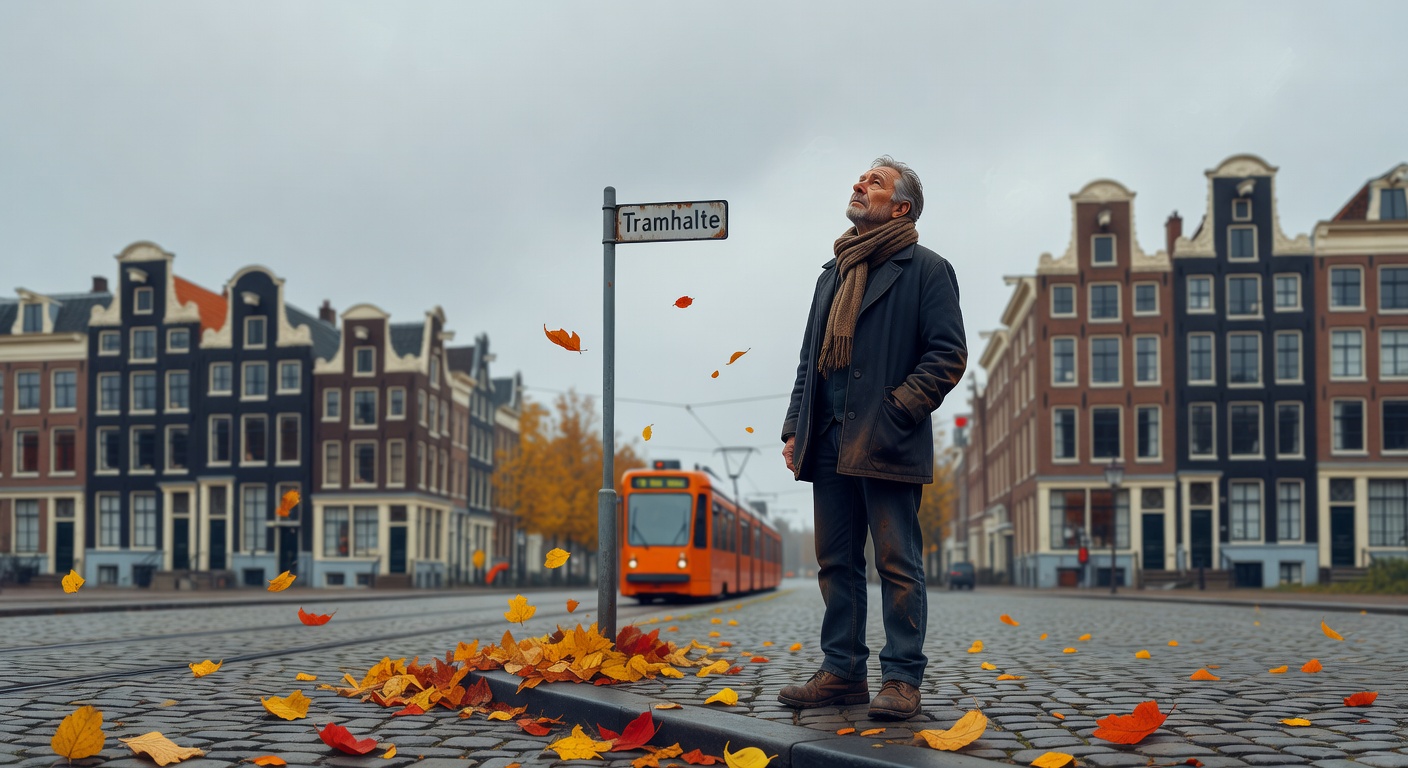
Next time you're stuck in the rain waiting for a tram, or standing in a slow queue at the Albert Heijn, try it. Look at the person next to you, glance at the sky, and say: "Hè, alweer te laat." ("Ugh, late again.") You might get a sigh back, a nod, or a shared eye-roll. That's Dutch connection, right there.
If you want to build more natural Dutch conversation skills like this, the Dagboek is a great way to start writing down everyday observations in Dutch and get real feedback on how you sound. Small habits, big results.
Mopperen is proof that Dutch is not just a language. It's a whole worldview. And once you get it, you'll notice it everywhere: on the train, in the office, at the market. You'll catch yourself smiling, because you finally understand what's really going on.
Goed bezig. Stap voor stap, you're not just learning Dutch words. You're learning how Dutch people actually think.
Vocabulary
| Dutch | English | Example sentence |
|---|---|---|
| mopperen | to grumble / to grouse | Hij moppert altijd over het verkeer. |
| klagen | to complain (seriously) | Ze klaagde bij de verhuurder over de verwarming. |
| typisch | typical (often said ironically) | "Het regent weer." "Typisch." |
| zeg | I tell you / you know (filler word) | Wat een lange rij, zeg. |
| hè | ugh / right? (exclamation) | Hè, de tram is alweer te laat. |
| file | traffic jam | Er stond een enorme file op de A10. |
| rij | queue / line | De rij bij de kassa was verschrikkelijk lang. |
| verschrikkelijk | terrible / dreadful | Het weer was verschrikkelijk gisteren. |
| alweer | again (with mild exasperation) | Het regent alweer. |
| prima | fine / great (often understated) | "Gaat het?" "Ja hoor, prima." |
| drukker | busier / more crowded | Het was drukker dan verwacht in de winkel. |
| sfeer | atmosphere / vibe | De sfeer op de markt was gezellig. |