Have you ever said 'Ik kom even' and gotten a confused look? Or heard a Dutch person say 'Wacht even' and wondered why they're being so casual? The tiny word 'even' is a Dutch superpower that can soften requests, add politeness, and make you sound instantly more fluent. But use it wrong, and you might come across as rude or awkward.
What Does 'Even' Actually Mean?
'Even' translates roughly to 'just' or 'for a moment', but its meaning is much richer. It reduces the perceived effort or time of an action. For example:
- 'Ik bel even' sounds like 'I'll quickly call' (no big deal).
- 'Doe even normaal' means 'Act normal' but with a softer, more pleading tone.
Without 'even', a request can feel blunt. Compare 'Geef me het zout' (Give me the salt) with 'Geef me even het zout' (Hand me the salt real quick). The second one is much friendlier.
Common Mistakes Learners Make
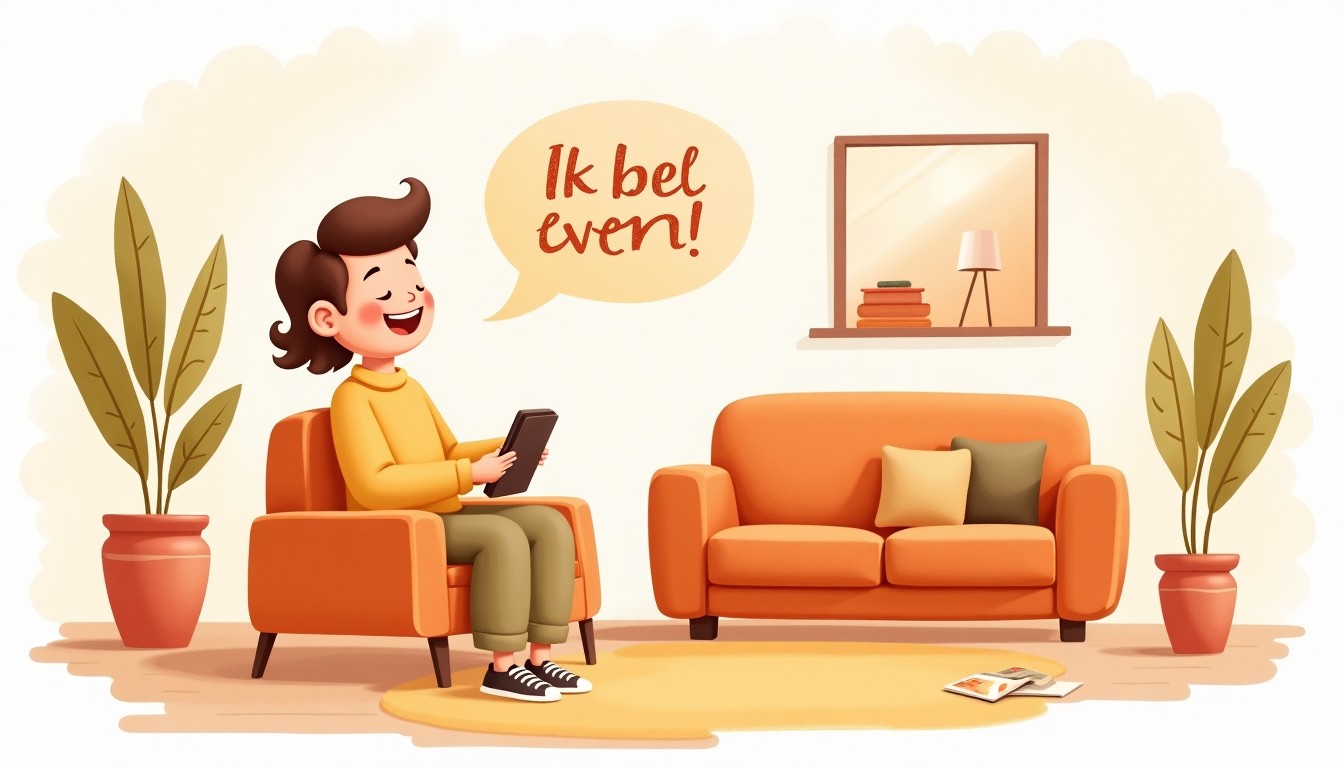
Learners often skip 'even' because they don't realize how important it is. Others overuse it in the wrong contexts. For instance, saying 'Ik ga even naar de wc' (I'm going to the toilet for a moment) is fine, but 'Ik ga even dood' (I'm going to die for a moment) is absurd. Also, 'even' can't be used with past tense actions that took a long time: 'Ik heb gisteren even een boek gelezen' (I read a book for a moment yesterday) sounds strange unless you literally read for a minute.
Another trap: 'even' with imperatives. 'Doe even de deur dicht' (Close the door real quick) is polite, but without 'even' it's a command. However, in formal writing, skip 'even' altogether.
How to Practice Using 'Even' Naturally
The best way to internalize 'even' is through exposure and active practice. Listen to how native speakers use it in podcasts, conversations, or TV shows. Then, try rewriting your own sentences with 'even'. Start with simple requests:
- 'Kun je me helpen?' becomes 'Kun je me even helpen?'
- 'Ik wil iets vragen' becomes 'Ik wil even iets vragen.'

To get real-time feedback, use the Dagboek app to write daily entries and receive corrected Dutch. You'll quickly see where 'even' belongs and where it doesn't.
Dutch Example Sentences
Ik moet even bellen. (I need to make a quick call.)
Wacht even, ik kom eraan. (Wait a moment, I'm coming.)
Doe even rustig aan. (Take it easy for a bit.)
Notice how 'even' makes each sentence feel lighter and more considerate.
FAQ
Can I use 'even' in formal situations? In formal writing or speeches, avoid 'even'. It's for everyday spoken Dutch.
What's the difference between 'even' and 'gewoon'? 'Even' reduces time/effort, while 'gewoon' means 'just' as in 'simply'. 'Doe gewoon normaal' vs 'Doe even normaal' have different nuances.
Do I always need 'even' with requests? No, but without it, a request can sound more direct or demanding. Use 'even' to soften.
Is 'even' used in Belgium? Yes, Flemish speakers use 'even' similarly, though sometimes with slight variation in frequency.
Vocabulary Table
| Dutch | English | Example Sentence |
|---|---|---|
| even | just, for a moment | Ik kom even langs. |
| wacht even | wait a moment | Wacht even, ik ben zo klaar. |
| doe even | do quickly (softener) | Doe even het licht uit. |
| even iets | something quick | Ik wil even iets vragen. |
| even bellen | to call quickly | Ik moet even bellen. |
| even kijken | to have a quick look | Laat me even kijken. |
| even denken | to think for a moment | Even denken, ik weet het niet. |
| even geduld | a moment of patience | Heb even geduld. |
| even rustig | for a moment calmly | Doe even rustig aan. |
| even tussendoor | in between quickly | Ik doe het even tussendoor. |
Practice This Now
Write three requests you might make today, then add 'even' to each. Say them out loud. For more practice, try the Dagboek app to write sentences and get corrections.
Mastering 'even' is a small step that makes a big difference. Start using it today, and you'll sound more natural and polite in Dutch conversations. Veel succes!
