
There is a Dutch word I will never forget: gezellig. I learned it not from a textbook, but from the moment a neighbor invited me in from the cold, handed me a mug of tea, and said, "Kom binnen, het is hier lekker gezellig." ("Come in, it's really cozy and warm here.") I felt the word before I understood it. And that feeling is exactly why it never left me.
This is not a coincidence. It is neuroscience. And once you understand why emotions supercharge memory, you will never study Dutch the same way again.
Why Your Brain Remembers What It Feels
The brain does not treat all information equally. When something carries emotional weight, whether that is joy, embarrassment, surprise, or genuine curiosity, the amygdala (your brain's emotional processing center) flags that experience as important. It sends a signal to the hippocampus: save this. The result is a memory that is deeper, more durable, and far easier to retrieve than anything you memorized from a vocabulary list.
Researchers call this the emotional enhancement of memory. In study after study, people remember emotionally charged words, scenes, and events significantly better than neutral ones. The implications for language learning are enormous, and almost nobody talks about them.
Most Dutch learners spend their time in a kind of emotional flatland. They repeat words. They fill in blanks. They listen to dialogues between fictional characters named "Jan" and "Maria" who are buying bread at a bakery. None of it feels like anything. And so very little of it sticks with real depth.
The fix is not to study more. It is to study with more feeling.
Think about the Dutch words you actually remember. I would bet a significant number of them were learned in a moment that mattered. A word you had to use to get help. A phrase that made someone laugh. A sentence you heard in a song that gave you chills. Emotion was the glue.

Four Ways to Inject Emotion Into Your Dutch Practice
So how do you actually do this intentionally? Here are four approaches that work, grounded in how memory and emotion interact.
1. Write about things that actually matter to you.
The single most powerful thing most learners overlook is personal writing. Not writing about "my cat" or "my house" for a language exercise, but genuinely processing your day, your thoughts, your feelings, in Dutch. When you write about something real, the language becomes attached to a real experience. The vocabulary is no longer abstract; it is tied to a moment.
This is exactly where the Dagboek comes in. You write about your day in any language, and you get corrected, natural Dutch back, complete with audio. It sounds simple. The impact is not. Learners who journal regularly report that words they used to forget after one pass now feel genuinely familiar, almost owned, because they have attached them to something personal.
Try it today: write three sentences about something that actually happened to you this week. Something small is fine. The emotion does not have to be dramatic; it just has to be real.
2. Embrace the embarrassment.
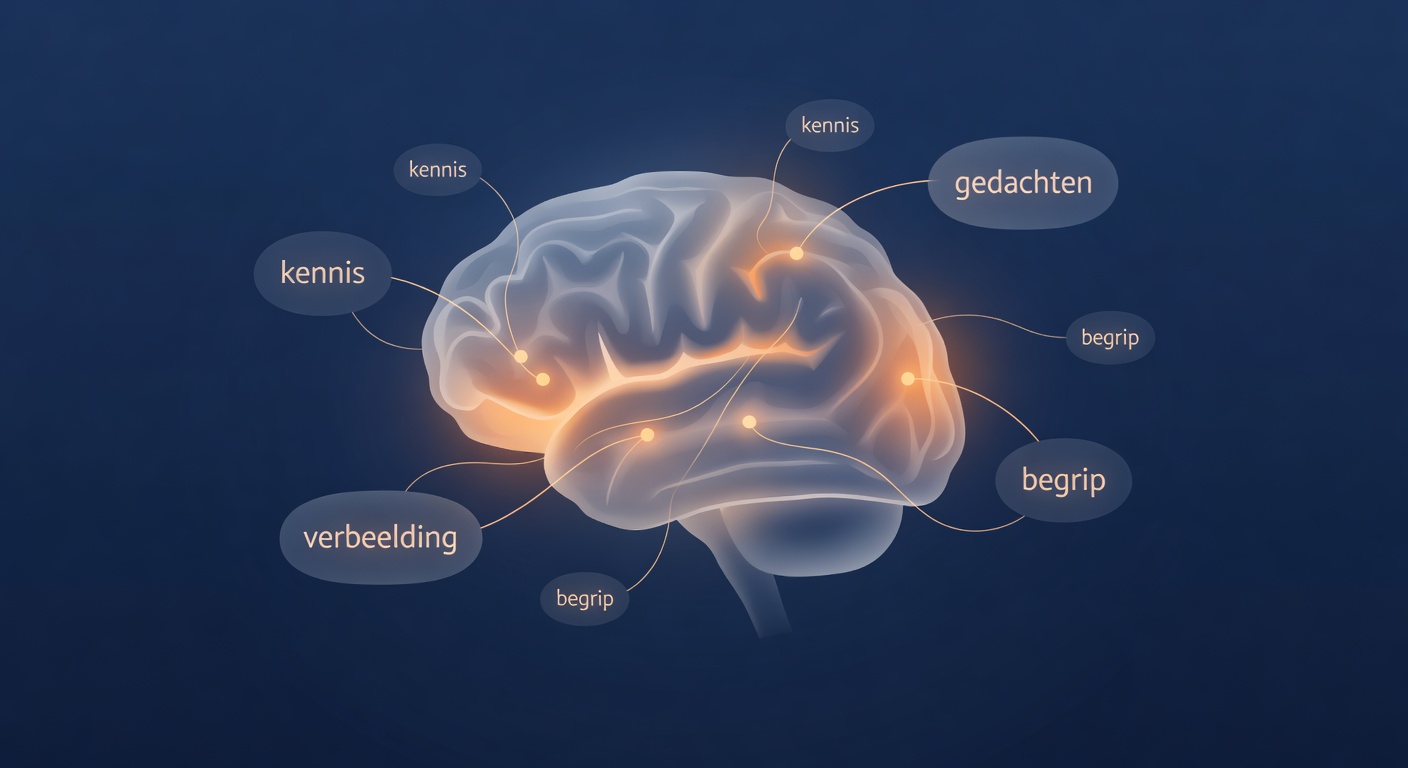
Nobody loves making mistakes. But from a memory perspective, a mistake made in a real conversation is one of the most effective learning events possible. The moment of social awkwardness, the correction from a native speaker, the slight flush of embarrassment: all of that emotional charge is the brain screaming remember this differently next time.
"Ik heb me vreselijk vergist, maar nu weet ik het zeker." ("I made a terrible mistake, but now I know for certain.") That sentence captures something true about language learning. The mistakes that sting a little are the ones that teach the most.
If you are avoiding speaking because you are afraid of errors, you are accidentally avoiding one of your brain's best learning tools. Lean into it.
3. Connect Dutch to your genuine interests.
Curiosity is an emotion. So is excitement. When you are genuinely interested in a topic, your brain is already primed to retain information about it more effectively. This is why learning Dutch through content you actually care about, a podcast about cycling, a documentary about Dutch history, a newsletter about architecture, beats textbook dialogues every time.
The Jouw Podcast is built around this exact principle. It is a personalized daily Dutch podcast built around your interests, not a generic script. When the content genuinely engages you, the language inside it has a much higher chance of sticking. You are not just hearing Dutch; you are caring about what is being said in Dutch. That distinction matters enormously.
4. Celebrate small wins out loud.

Positive emotion is just as powerful as negative emotion for memory. When you understand something for the first time, when you hold a real conversation, when you finally get the word order right in a long sentence, mark that moment. Say it out loud. Write it down. Tell someone. The positive emotional spike that comes with genuine pride and satisfaction also triggers the "save this" signal in your brain.
Learners who track small wins tend to progress faster, not because they are more talented, but because they are generating more emotionally significant memory-encoding moments.
The Mistake That Keeps Learners Emotionally Flat
Here is something I see constantly. Learners treat Dutch like a technical subject. They approach it the way you might approach accounting or plumbing: as a set of rules to memorize and apply. There is nothing wrong with rules. Dutch grammar has them, and they matter. But if that is all your practice consists of, you are leaving the most powerful part of your brain completely out of the picture.
Language is fundamentally social. It is emotional by nature. Humans developed language to connect with each other, to warn each other, to express love and frustration and wonder. Every time you strip that social and emotional layer away in the name of "efficient study," you make it harder for your brain to encode what you are learning.
"Taal leren gaat niet alleen over kennis; het gaat ook over gevoel." ("Learning a language is not just about knowledge; it is also about feeling.") I say this to every student I work with, and I mean it.
If your current practice feels dry and mechanical, that is not a sign you need to work harder. It is a sign you need to work differently. Ask yourself: when did I last feel something while studying Dutch? If you cannot remember, that is your first thing to fix.

Structured practice still matters. Grammar, reading comprehension, listening skills: these are real components of fluency and they need attention. The NT2 Trainer is a strong example of structured practice done well, covering the skills required for formal assessments at every CEFR level. But even structured practice can be made more emotionally engaging. Choose reading texts about topics that genuinely interest you. Listen to audio that feels relevant to your life. Make the structured work feel like it connects to something real.
The learners who make it to fluency are almost never the ones who studied the most hours. They are the ones who found ways to make the language feel alive. They had conversations that mattered. They listened to things they cared about. They wrote about their own lives. They let themselves feel curious, frustrated, delighted, and proud, and their brains rewarded them for it.
You do not need a perfect study plan. You need an emotionally engaged one.
Start today. Pick one thing you actually care about. Write one honest sentence in Dutch about how your week is going. Find one Dutch podcast about something that genuinely excites you. Make one mistake in a real conversation and let yourself feel it.
That is where fluency actually lives.
| Dutch | English | Example sentence |
|---|---|---|
| gevoel | feeling / emotion | Taal heeft altijd een gevoel. |
| herinnering | memory | Die herinnering vergeet ik nooit. |
| vergissen (zich) | to make a mistake | Ik vergiste me, maar ik leerde ervan. |
| bijblijven | to stay with you / to stick | Woorden met emotie blijven beter bij. |
| nieuwsgierigheid | curiosity | Nieuwsgierigheid helpt bij het leren. |
| verlegenheid | embarrassment / shyness | De verlegenheid verdwijnt met oefening. |
| opslaan | to save / to store | Het brein slaat emotionele dingen beter op. |
| koppelen aan | to connect to / to link to | Ik koppel nieuwe woorden aan een herinnering. |
| trots | proud / pride | Ik ben trots op mijn eerste gesprek in het Nederlands. |
| echtheid | authenticity / genuineness | Echtheid maakt leren krachtiger. |
| verwerken | to process | Schrijven helpt je ervaringen te verwerken. |
| beklijven | to stick / to leave a lasting impression | Goede lessen beklijven altijd. |
Open the Dagboek and write 3-5 sentences about something that genuinely moved you this week. It does not matter if it is big or small. Write it in English if Dutch feels too hard right now. You will get corrected, natural Dutch back with audio. Read it aloud. Notice which words feel different when they are attached to something real.
