
When you sit down to learn Dutch, you probably think of it as an intellectual exercise. You focus on grammar rules, vocabulary lists, and pronunciation drills. You are trying to force information into your brain through sheer repetition. But what if I told you that one of the most powerful tools for language retention is completely ignored by most traditional learning methods? I'm talking about your emotions.
Think back to your strongest memories. Are they mundane, everyday occurrences? Unlikely. They are the moments filled with joy, fear, surprise, or embarrassment. The brain is wired to remember emotionally charged events because, from an evolutionary standpoint, those events are usually the most important for survival. If we can harness that same emotional power and apply it to learning Dutch, the results can be transformative.
The Connection Between Feeling and Remembering
Neuroscience has shown a direct link between the amygdala (the brain's emotional center) and the hippocampus (the area responsible for forming new memories). When you experience an emotion, the amygdala signals the hippocampus that the current event is significant and should be stored securely. This is why you remember exactly where you were during a major life event, but can't recall what you had for breakfast last Tuesday.
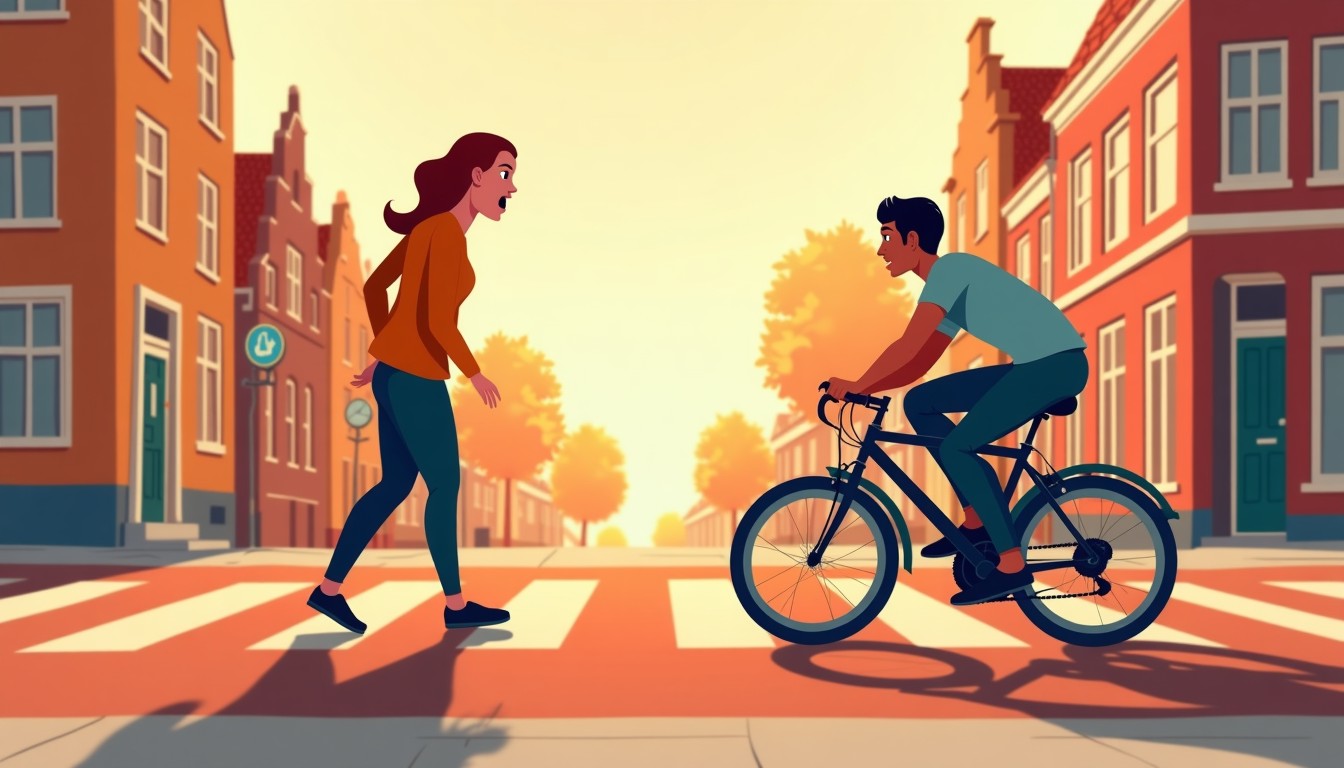
In language learning, this means that a word learned in a neutral, sterile environment (like a flashcard app) is far more likely to be forgotten than a word learned during a highly emotional experience. If you learn the word gevaarlijk (dangerous) by reading it in a textbook, it might take ten repetitions to stick. But if you learn it when a Dutch person yells it at you as you accidentally step into a busy bike lane, you will remember it instantly and forever.
We can't always manufacture life-or-death situations to learn vocabulary, but we can intentionally inject emotion into our study routines. This is where personalized learning becomes crucial. When the content you consume resonates with your interests, your passions, or your sense of humor, you are more likely to feel something, and therefore more likely to remember it. This is the core philosophy behind our Jouw Podcast feature. By generating a daily Dutch podcast built entirely around the topics you care about, we ensure that the vocabulary you encounter is tied to something you find genuinely interesting or exciting.
Embracing the "Embarrassment Premium"

One of the strongest emotions we experience when speaking a new language is embarrassment. The fear of making a mistake, of sounding foolish, or of being misunderstood can be paralyzing. Many learners avoid speaking until they feel "ready," which usually means they never speak at all.
However, we need to reframe embarrassment. Instead of seeing it as a negative experience to be avoided, we should view it as a powerful memory-enhancing tool. Let's call it the "embarrassment premium." When you make a mistake in a real conversation and feel a flush of embarrassment, your brain is highly activated. The correction you receive in that moment is far more likely to stick than a correction on a written exercise.
For example, if you accidentally use the word fokken (to breed) instead of knippen (to cut) when asking for a haircut, the resulting confusion and your subsequent embarrassment will ensure you never mix those words up again. Ik wil graag mijn haar laten knippen (I would like to have my hair cut) will be permanently etched into your memory.
To leverage this, you have to put yourself in situations where mistakes are possible and even likely. You have to speak before you are ready. If you are nervous about real-time conversations, a good stepping stone is a tool like the Dagboek. Writing about your daily life, your frustrations, and your joys allows you to express real emotions in Dutch. When you receive corrections, they are tied to your personal experiences, making them much more memorable than generic textbook corrections.

Curiosity: The Engine of Vocabulary Acquisition
While strong emotions like embarrassment or joy are powerful, we can't rely on them constantly. For everyday learning, the most sustainable emotion to cultivate is curiosity. When you are genuinely curious about how to express a specific thought or understand a particular nuance, your brain is primed to receive and retain that information.
The problem with traditional vocabulary lists is that they provide answers to questions you never asked. You are given a list of words related to "The Post Office" and expected to memorize them, regardless of whether you have any immediate need or desire to talk about the post office.

A more effective approach is to let your curiosity drive your vocabulary acquisition. When you are having a conversation, reading an article, or just going about your day, notice the moments when you want to say something in Dutch but don't know the words. That gap in your knowledge creates a tiny spark of curiosity. If you immediately look up the word and use it, the retention rate is incredibly high.
Hoe zeg je 'overwhelmed' in het Nederlands? (How do you say 'overwhelmed' in Dutch?) When you actively seek out the word overweldigd because you need it to express how you are feeling right now, the emotional connection is established. To support this kind of curiosity-driven learning, explore our range of practice apps that allow you to learn in context, rather than in isolation.
Learning Dutch shouldn't be a purely academic exercise. By recognizing and utilizing the power of your emotions, whether it's the thrill of understanding a joke, the embarrassment of a mistake, or the simple curiosity of wanting to express yourself, you can transform your language journey from a chore into a deeply personal and highly effective experience.