
It is pouring rain, the wind is howling at sixty kilometers per hour, and your Dutch friend looks out the window with a big smile.
"Lekker weertje," they say. Nice weather.
You might think they are being sarcastic. But then they put on a thick coat and invite you for a walk on the beach. Welcome to the confusing, brilliant, and slightly masochistic Dutch concept of uitwaaien.
What exactly is uitwaaien?
If you look it up in a dictionary, uitwaaien translates to something boring like "getting a breath of fresh air." But that completely misses the point.
Literally, it means "to blow out." The idea is that you go outside in strong winds, usually at the beach or in a flat open field, and let the wind literally blow the stress, worries, and cobwebs right out of your head.
Here is how you might hear it used in real life:
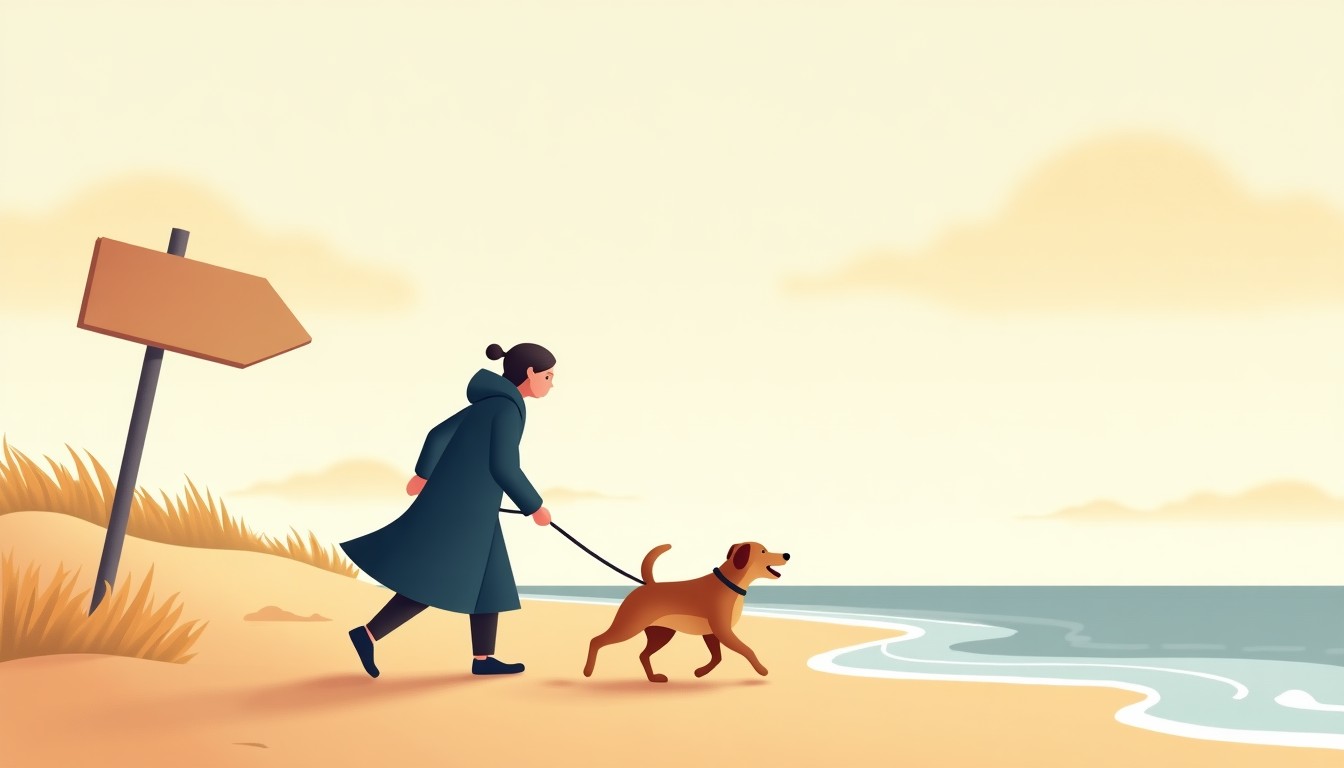
"Ik heb een drukke week gehad. Ik ga even lekker uitwaaien op het strand."
(I have had a busy week. I am going to clear my head on the beach.)
Why the Dutch weaponized the wind
The Netherlands is famously flat. There are no mountains to stop the wind sweeping in from the North Sea. Instead of complaining about it, the Dutch turned it into a mental health strategy.
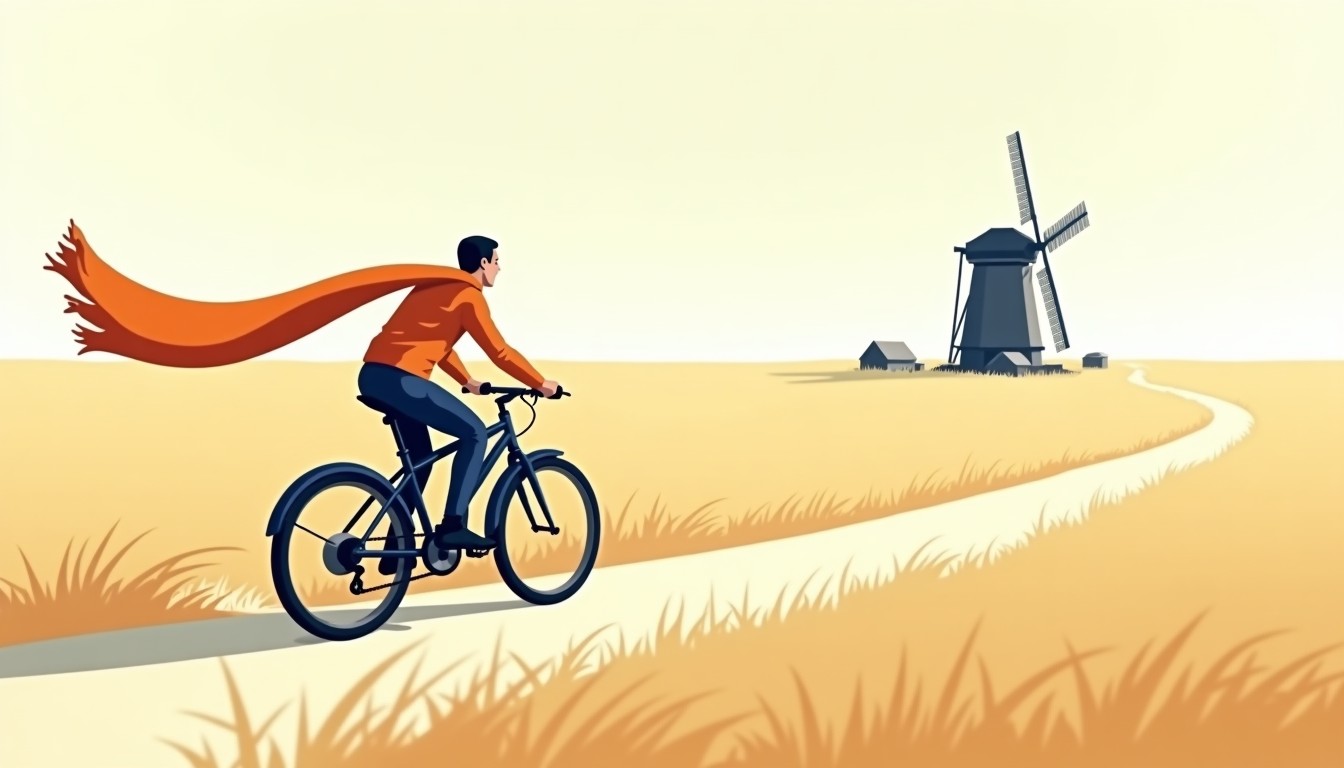
Feeling overwhelmed? Go walk in a storm. Got a broken heart? Time to battle a headwind on your bicycle. Stressed about your Dutch exams? You guessed it.
"Na dat moeilijke examen moest ik echt even uitwaaien."
(After that difficult exam, I really needed to clear my head in the wind.)
When you are fighting against a stiff breeze, you simply do not have the energy to overthink your problems. The sheer physical effort of walking forces you to be present in the moment.
A student's windy revelation
I recently spoke to one of my students, an expat from Spain who was struggling with the dark Dutch winters. She hated the wind. Every time she stepped outside, she felt like she was fighting a losing battle against the weather.
I challenged her to reframe it. Stop fighting the wind, and start using it. I told her to go to the beach at Scheveningen on the next blustery day, walk for thirty minutes, and then treat herself to a massive slice of apple pie.
"Ik begreep het pas toen ik het zelf probeerde."
(I only understood it when I tried it myself.)
She came back to our next lesson completely energized. She realized that the wind forces you out of your own head. You cannot worry about your grammar mistakes or your upcoming presentation when you are trying to keep your balance on a sandy beach.
How to practice the art of uitwaaien
You do not need to wait for a hurricane. A good, brisk autumn day is perfect. Put on a warm coat, leave your umbrella at home (it will just break anyway), and find an open space.
It is also the perfect time to practice your listening skills. I always tell my students to pop in their earbuds and listen to their personalized daily Dutch podcast while battling the elements. The rhythm of walking combined with passive listening works wonders for your brain.
And when you get back home? Your cheeks will be red, your fingers will be freezing, but your mind will be completely clear. You can pour yourself a hot coffee and write about your adventure in the Dagboek app.
The reward after the storm
The true secret of uitwaaien is what happens afterward. The Dutch are masters of cozy contrast. After you have spent an hour getting battered by the elements, you retreat into a warm beach pavilion, known as a strandtent.
"Zullen we warme chocolademelk drinken in de strandtent?"
(Shall we drink hot chocolate in the beach pavilion?)
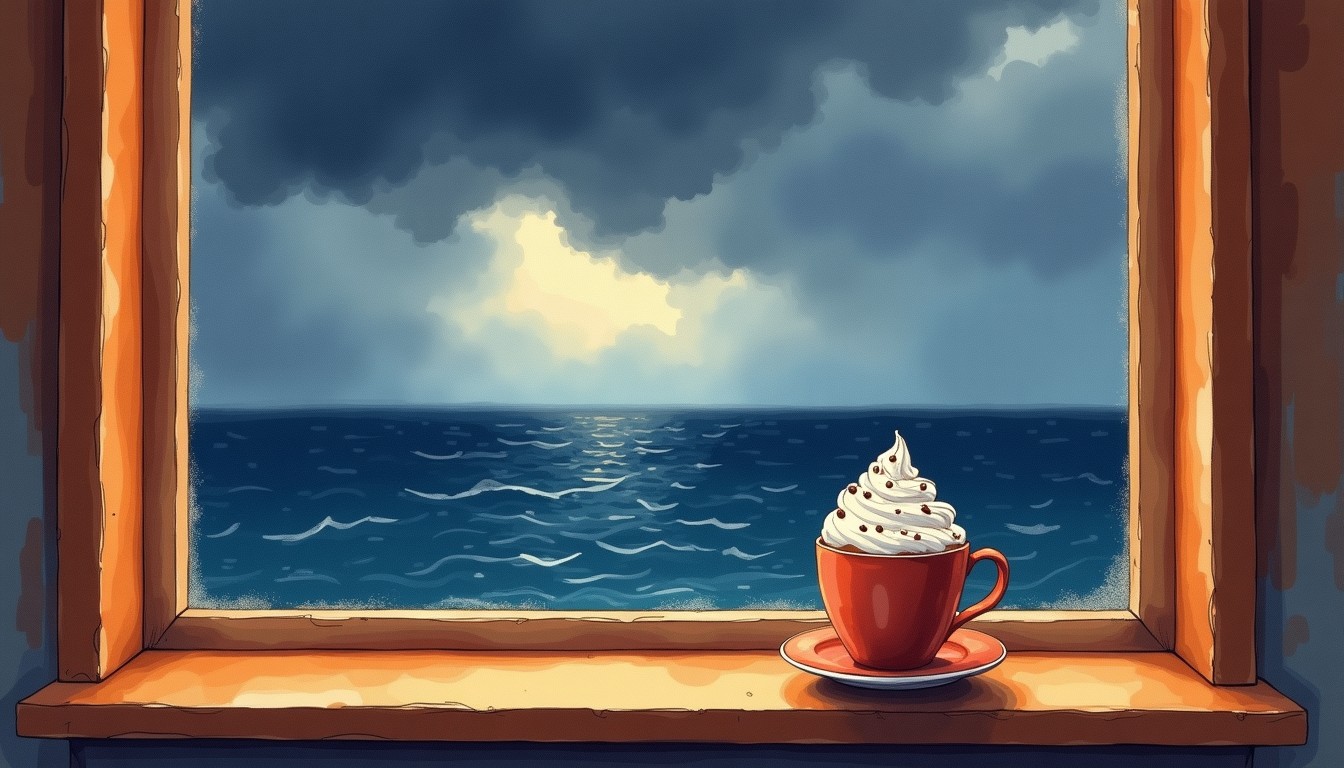
Sitting behind glass, watching the wild sea while wrapping your cold hands around a hot mug, is one of the greatest feelings in the world. The contrast between the harsh outside world and the warm, safe inside world makes the experience complete.
The grammar behind the wind
As a quick bonus lesson, uitwaaien is a separable verb. That means the prefix uit gets pushed to the end of the sentence in the present tense.
"Wij waaien vandaag uit aan de kust."
(We are getting a breath of fresh air at the coast today.)
It is a beautiful little word that perfectly captures the Dutch spirit. Pragmatic, closely tied to the weather, and surprisingly good for your soul.
Vocabulary for your next windy walk
| Dutch | English | Example sentence |
|---|---|---|
| Uitwaaien | To clear one's head in the wind | Ik ga vanmiddag even uitwaaien. |
| De wind | The wind | De wind is heel sterk vandaag. |
| Het strand | The beach | We wandelen graag op het strand. |
| De storm | The storm | Er komt een zware storm aan. |
| Wandelen | To walk | Zij wandelen elke zondag. |
| Het hoofd leegmaken | To clear the mind | Sporten helpt om mijn hoofd leeg te maken. |
| De frisse lucht | The fresh air | Ik heb wat frisse lucht nodig. |
| De paraplu | The umbrella | Mijn paraplu is kapot. |
| De regen | The rain | Ik fiets liever niet in de regen. |
| Waaien | To blow (wind) | Het waait hard in Nederland. |
| De jas | The coat | Trek een warme jas aan. |
| De laarzen | The boots | Vergeet je laarzen niet. |
| De herfst | The autumn/fall | De herfst is mijn favoriete seizoen. |
| Ontspannen | To relax | Na het werk wil ik gewoon ontspannen. |
| De kust | The coast | We wonen dicht bij de kust. |
So next time the wind starts rattling your windows, do not hide under a blanket. Put on your boots and step outside. You might just find exactly what you need.
Stap voor stap komen we er wel!