
Imagine walking into a Dutch supermarket, grabbing a jar labeled 'pindakaas,' and thinking, 'Wait, peanut cheese?' You're not alone. Every expat does a double-take. But here's the kicker: it's not cheese. It's peanut butter. So why the weird name? And what does this tell us about the Dutch language and its stubborn little quirks?
The Origin of 'Pindakaas'
Back in the 1940s, a Dutch company wanted to sell peanut butter. But there was a problem: the word 'boter' (butter) was legally protected for dairy products only. They couldn't call it 'pindaboter.' So they got creative and called it 'pindakaas' (peanut cheese) because the texture resembled cheese spread. And the name stuck. Classic Dutch pragmatism: if you can't call it butter, call it cheese. Problem solved.
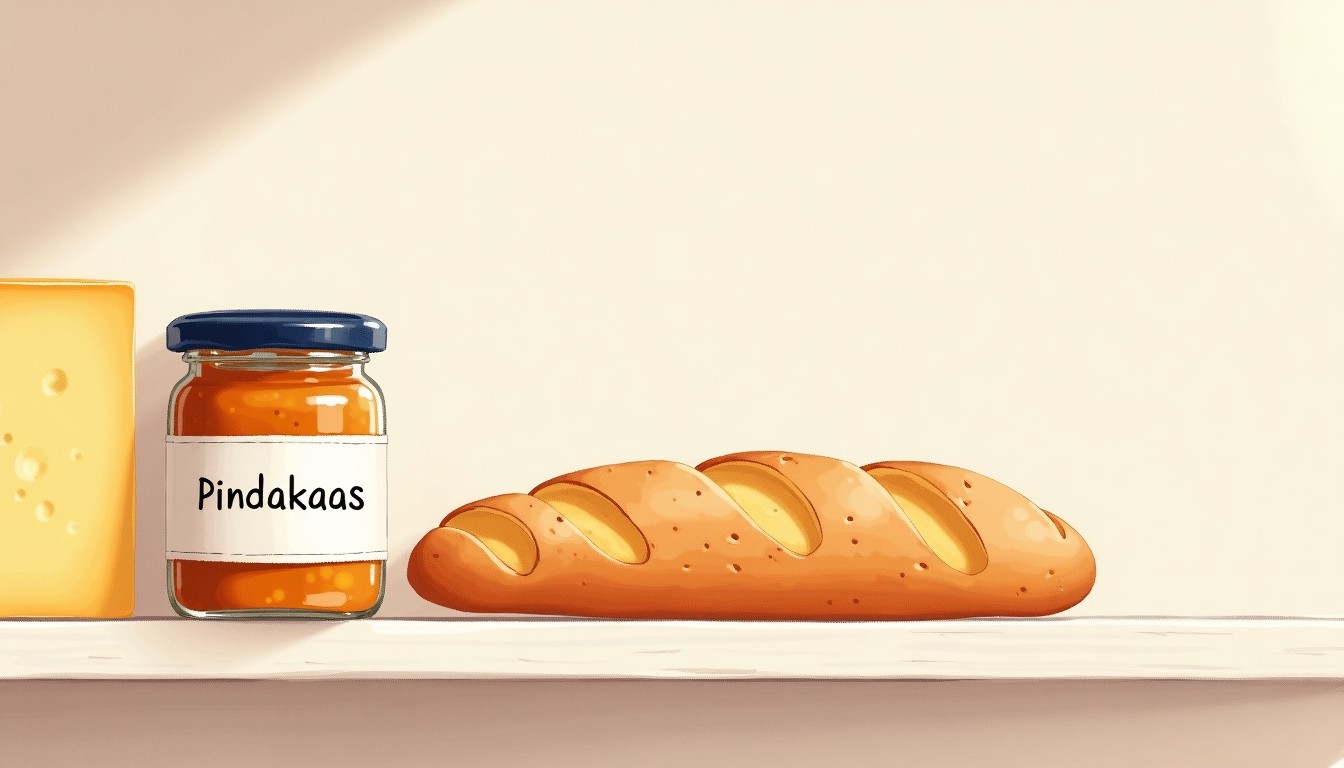
This little story is a perfect example of how Dutch bends rules to fit its own logic. And it's one of those words that makes you go, 'Huh, that's weird. I love it.'
More Weird Dutch Food Words

Pindakaas isn't the only rebel. Take 'vlees' (meat) and 'kaas' (cheese) – straightforward, right? But then there's 'appelmoes' (applesauce), which literally means 'apple mush.' Or 'hagelslag' (chocolate sprinkles), which translates to 'hail strike.' You're literally eating hail for breakfast. Delicious, chocolatey hail.
And let's not forget 'rookworst' (smoked sausage). 'Rook' means smoke, and 'worst' means sausage – but also 'worst' means 'worst' in English. So you're eating the worst smoked thing. It's actually amazing.
These words are a goldmine for language learners because they stick in your brain. Once you know the story behind 'pindakaas,' you'll never forget it. And that's the secret: attach a story to a word, and it becomes unforgettable.
How to Use This in Your Learning
Next time you learn a weird Dutch word, ask yourself: why is it called that? Dig into the etymology. You'll find history, humor, and a deeper connection to the language. If you want to practice discovering these stories, try keeping a daily diary in Dutch – write about the words that surprise you. It's a fun way to build vocabulary and cultural knowledge at the same time.
And if you're ready to dive deeper into pronunciation and listening, the Fluency Tulip can help you hear these words in real conversations. Because let's be honest, 'pindakaas' sounds way more fun when a Dutch person says it.
Goed bezig! Stap voor stap, you're building a vocabulary that's as quirky as the Dutch themselves.