
Stel je voor: het is 12:30 uur in een typisch Nederlands kantoor. Laptops klappen dicht en een onuitgesproken signaal gaat door de kamer. Het is tijd voor de lunch. Maar als je een warme maaltijd of een complexe salade verwacht, kom je bedrogen uit. De lunchtrommels komen tevoorschijn en de lucht vult zich met het onmiskenbare geritsel van broodzakjes en de subtiele geur van... kaas.
Het Dagelijkse Zuivelritueel
De Nederlandse relatie met zuivel is niet zomaar een dieetvoorkeur; het is een diepgewortelde culturele pijler. "Ik eet elke dag een broodje kaas" is niet zomaar een zin; het is een levensstijl. Maar het stopt niet bij de lunch. Melk, yoghurt, karnemelk en eindeloze variëteiten kaas zijn basisproducten die de supermarktschappen en dagelijkse routines domineren.

Deze obsessie is geworteld in geschiedenis en geografie. De vlakke, weelderige weiden van Nederland zijn perfect voor grazende koeien. Eeuwenlang is de melkveehouderij een hoeksteen van de Nederlandse economie geweest. Maar het is meer dan alleen economie. Zuivel wordt gezien als stevig, voedzaam en essentieel voor het bouwen van die beroemde lange Nederlandse lichamen. Het is praktisch, pretentieloos voedsel, wat perfect aansluit bij de Nederlandse mentaliteit van dingen simpel en efficiënt doen.
Zuivel in het Woordenboek
Je weet dat een cultuur ergens door geobsedeerd is als het hun taal begint binnen te dringen. Nederlanders hebben een schat aan idiomen en uitdrukkingen rondom zuivel. Bijvoorbeeld, als iemand onzin praat, kan een Nederlander zeggen dat ze "uit hun nek kletsen". Maar als je echt wilt benadrukken hoe belachelijk een verhaal is, zeg je misschien: "Dat is een lulkoek verhaal". Oké, misschien is die niet strikt zuivel, maar laten we naar een beter voorbeeld kijken.

Als dingen misgaan, hoor je misschien: "De melk is overgekookt", wat betekent dat iemand zijn geduld heeft verloren. Of als je wilt zeggen dat iets heel makkelijk is, is het "een eitje", wat geen zuivel is, maar wel met ontbijt te maken heeft! Het punt is: voedsel, en met name boerderijproducten, geeft sterk kleur aan de Nederlandse taal.
Navigeren door het Supermarktschap
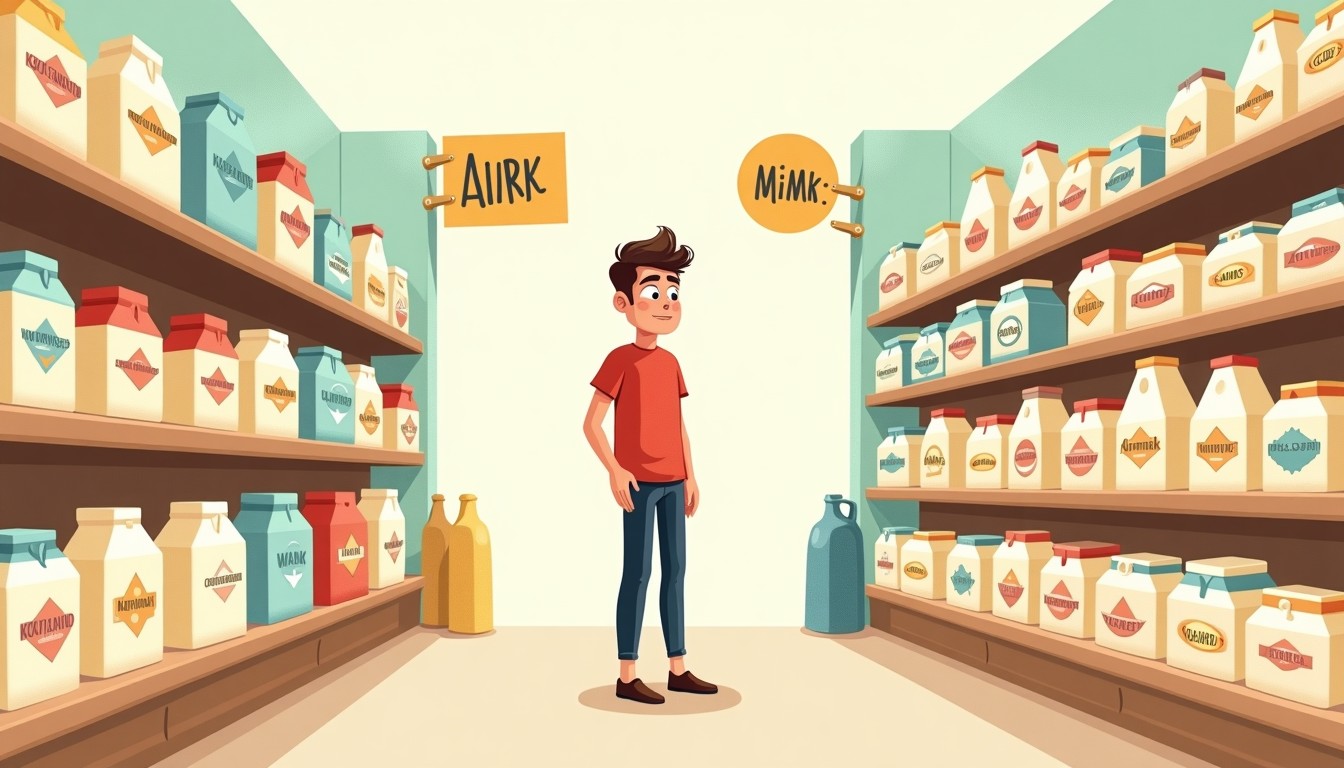
Voor een expat kan het Nederlandse zuivelschap overweldigend zijn. De enorme verscheidenheid aan yoghurts, vla, kwark en melksoorten is verbazingwekkend. En laten we het over kaas hebben. Er is Jonge kaas, Belegen, Oude kaas, en alles daartussenin. Je kaas kennen is een cruciaal onderdeel van integreren.
Als je je zuivelvocabulaire in het echt wilt oefenen, is een uitstapje naar de lokale markt perfect. Probeer te vragen: "Mag ik een stukje oude kaas proeven?". Het is een geweldige manier om een gesprek te beginnen en een gratis snack te scoren. En als je op zoek bent naar meer gestructureerde manieren om je spreekvaardigheid te oefenen voordat je naar de kaaskraam gaat, bekijk dan onze Fluency Tulip voor uitstekende luister- en uitspraakoefeningen.
Omarm de Kaas

Dus de volgende keer dat je een collega gelukkig ziet kauwen op een plakje Gouda, oordeel dan niet. Omarm het. Probeer een glas melk aan je lunch toe te voegen. Misschien vind je het verrassend verfrissend. En terwijl je je een weg baant door dit zuivelminnende land, onthoud dan dat het begrijpen van deze culturele eigenaardigheden net zo belangrijk is als het beheersen van de grammatica.
Nederlands leren is een reis, vol nieuwe smaken en onverwachte zinnen. Als je je overweldigd voelt, onthoud dan dat consistentie de sleutel is. Blijf oefenen, misschien terwijl je geniet van een boterham met kaas. Voor meer gestructureerde oefening die in je drukke leven past, verken onze Email Training. Goed bezig, en tot de volgende keer!