
Picture this: It's a sweltering July afternoon in Amsterdam. You've just biked across town, and you're meeting your Dutch friends on a sunny terrace. You sit down, wipe your forehead, and say loudly: "Ik ben zo warm!"
Suddenly, the conversation stops. Your friends exchange amused glances. One of them chuckles. You've just made one of the most classic, slightly embarrassing, and absolutely hilarious mistakes in the Dutch language.
The "To Be" vs. "To Have" Trap
In English, we use the verb "to be" to describe how we feel temperature-wise. I am hot. I am cold. It makes logical sense. We embody the temperature.
But the Dutch? They prefer to possess it.
When you want to express that you are feeling hot or cold, you must use the verb hebben (to have), not zijn (to be).

Here is the crucial distinction:
- Ik heb het warm. (I am hot/I feel warm.)
- Ik heb het koud. (I am cold/I feel cold.)
Notice the little word het in there? It translates literally to "I have it warm." You possess the feeling of warmth.
So, What Happens When You Say "Ik Ben Warm"?
This is where it gets funny. If you say "Ik ben warm," you are describing your physical state as an object. You are saying that your actual body temperature is elevated, like a freshly baked stroopwafel or a radiator.

Worse, in certain contexts, saying "Ik ben heet" (I am hot) means... well, it means you are feeling rather amorous. It translates closer to "I am horny."
So, when you sat down on that terrace and proclaimed "Ik ben zo heet!" you weren't complaining about the weather; you were making a rather bold personal announcement to your friends.
A Simple Fix for a Common Mistake
Don't worry, every expat makes this mistake at least once. It's practically a rite of passage. But fixing it is easy once you understand the logic.
Think of it this way: You don't *become* the temperature; you *experience* it.
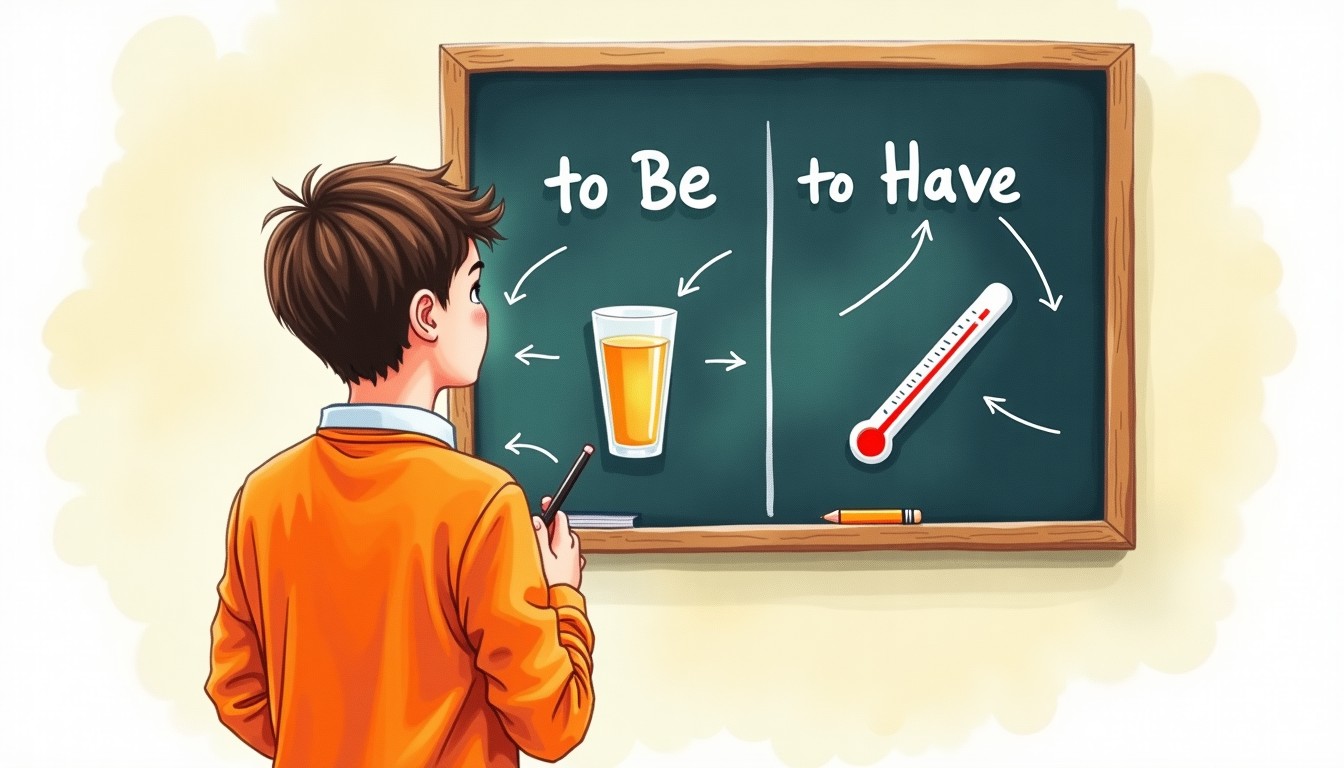
Let's look at some examples:
Ik heb het koud, mag de verwarming aan? (I am cold, can the heating go on?)
Hij heeft het altijd warm in de zomer. (He is always hot in the summer.)
If you want to make sure you never make this mistake again, writing it out can really help cement the rule in your brain. Practicing with a tool like Dagboek is perfect for this. You can write about your day, the weather, and how you feel, and get immediate feedback on your grammar.
Beyond Temperature: Other "Hebben" Feelings

This "to have" structure isn't just for temperature. The Dutch use it for other physical states, too.
- Ik heb dorst. (I am thirsty. Literally: I have thirst.)
- Ik heb honger. (I am hungry. Literally: I have hunger.)
- Ik heb slaap. (I am sleepy. Literally: I have sleep.)
It's a slight shift in perspective, but once you master it, you'll sound much more natural (and avoid any awkward terrace encounters).
If you are struggling with these little grammatical nuances, sometimes a bit of focused practice is all you need. The structured exercises in our Email Training are designed to tackle exactly these kinds of common stumbling blocks, delivering bite-sized lessons straight to your inbox.
So, next time the sun is beating down on the canals, remember: you don't *are* hot, you *have it* hot. Goed bezig, and keep practicing!
