
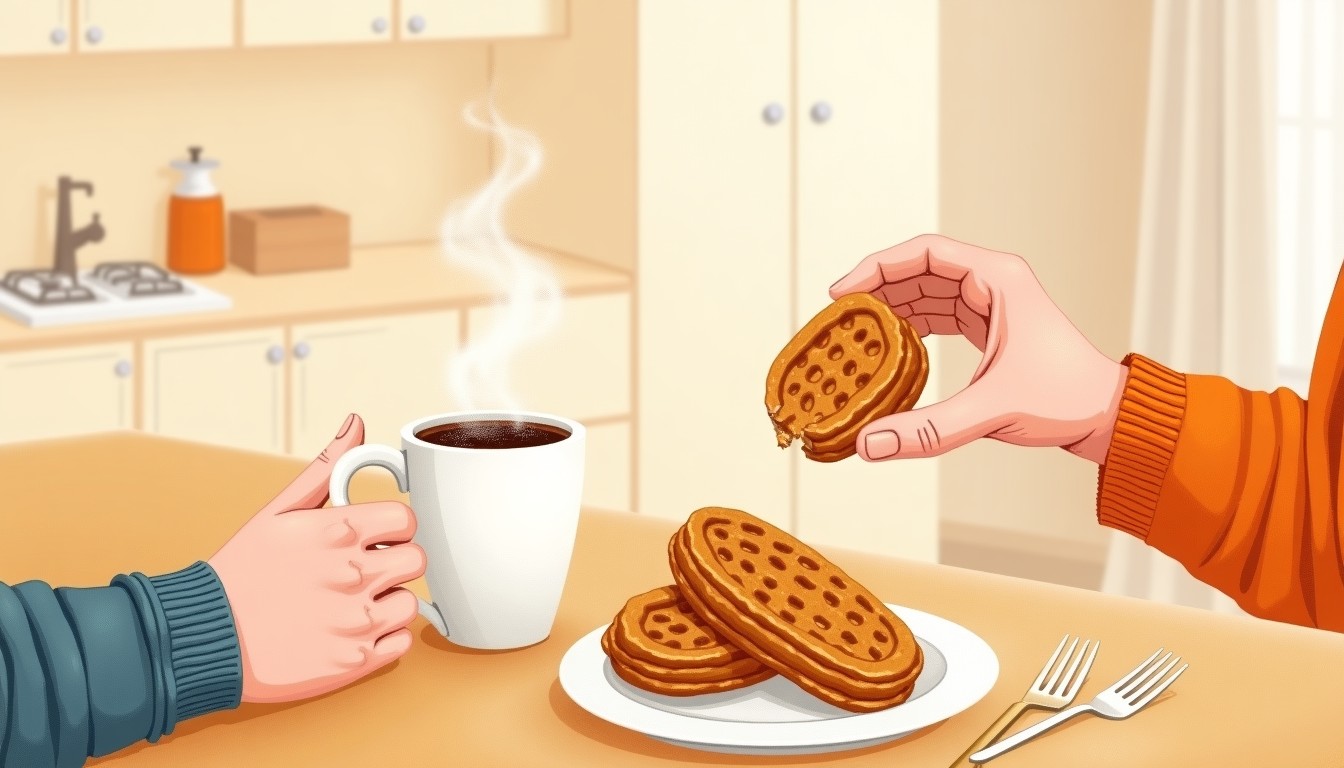
You know that moment when you bite into a perfect stroopwafel, and your Dutch friend says 'Lekker!'? Sure, it means 'tasty.' But here's the thing: Dutch people use 'lekker' for almost everything. And if you only use it for food, you're missing out on 80% of its power.
Let me paint a picture. You're cycling along a canal on a sunny day. The wind is in your hair. A Dutch person would say: 'Het is lekker weer.' (The weather is nice.) Not 'mooi' (beautiful), not 'goed' (good), but 'lekker.' Because 'lekker' isn't just taste it's a feeling of comfort, satisfaction, even coziness.
Here's the trick: Dutch people use 'lekker' to describe anything that feels good. A comfortable bed? 'Lekker geslapen' (slept well). A relaxing bath? 'Lekker in bad.' Even a fun party: 'Het was lekker druk.' (It was nice and busy.) Wait, busy is good? In Dutch, yes if it's 'lekker druk,' it means pleasantly lively.
How to Use 'Lekker' Like a Native
Start by replacing 'goed' with 'lekker' in situations where something feels good. For example, instead of 'Ik heb goed geslapen' (I slept well), try 'Ik heb lekker geslapen.' It sounds more natural and shows you understand the nuance.
But be careful: 'lekker' can also mean 'sexy' when referring to a person. So don't call your boss 'lekker' unless you're ready for that conversation. Stick to food, weather, and experiences until you're confident.

To practice, tell your Dutch friend after a meal: 'Het was lekker!' Or on a sunny day: 'Wat een lekker weertje!' You'll see their face light up because you've cracked the code of Dutch everyday language.
If you want to get more comfortable with these cultural nuances, the Fluency Tulip is a great place to start. It trains your ear for real Dutch conversations where 'lekker' pops up everywhere.

Common Mistake to Avoid
Don't overuse 'lekker' for serious or negative situations. You wouldn't say 'een lekker probleem' (a tasty problem) it just sounds weird. Save 'lekker' for positive, comfortable moments. And never use it when talking about something formal or official.
Another tip: 'Lekker' can also be used sarcastically. If someone rains on your parade, you might say 'Dat is lekker dan' (That's just great) in a flat tone. Context is everything.

So go ahead, get 'lekker' into your daily Dutch. Describe your sleep, your coffee, your lazy Sunday afternoon. Each time you use it right, you're one step closer to sounding like a local.
Goed bezig! Stap voor stap wordt het 'lekker' natuurlijk.