
Picture this: You're at a birthday party in Amsterdam. Someone tells a story about their cat, and everyone bursts out laughing. You laugh too, but something feels off. You're missing a beat. The secret? They all just said hè at the exact right moment, and it made the whole story land.
Hè is the Swiss Army knife of Dutch conversation. It's a grunt, a question, a confirmation, and a bonding tool all in one. And once you master it, you'll sound less like a tourist and more like a local.
What Does 'Hè' Actually Mean?
Technically, hè is a tag question, like right? or isn't it? But it's so much more. It's a way to check if the other person is following along, to express surprise, or to share a moment of mutual understanding.
For example:

- Het is mooi weer vandaag, hè? (The weather is nice today, right?)
- Dat was een goeie film, hè! (That was a good movie, wasn't it!)
- Hè? Wat zeg je? (Huh? What did you say?)
See the range? It can be a gentle nudge, an exclamation, or even a question when you didn't catch something.
The Magic of the 'Hè' Bond
When you use hè correctly, you're not just speaking Dutch. You're signaling that you're part of the group. It's like a secret handshake. Dutch people use it constantly, and when you drop it in naturally, their eyes light up.

I remember a student who was struggling with small talk. She learned to sprinkle hè into her sentences, and suddenly her colleagues started including her in jokes. It sounds silly, but this tiny word opened doors.
How to Use It Like a Pro
Here's your quick guide:
- Confirmation: After a statement, add hè to invite agreement. Leuk feestje, hè? (Nice party, right?)
- Surprise: Say hè with a rising tone when you're shocked. Hè? Dat kan toch niet! (What? That can't be true!)
- Empathy: When someone tells you something tough, a soft hè shows you feel for them. Hè, wat vervelend. (Gosh, that's annoying.)
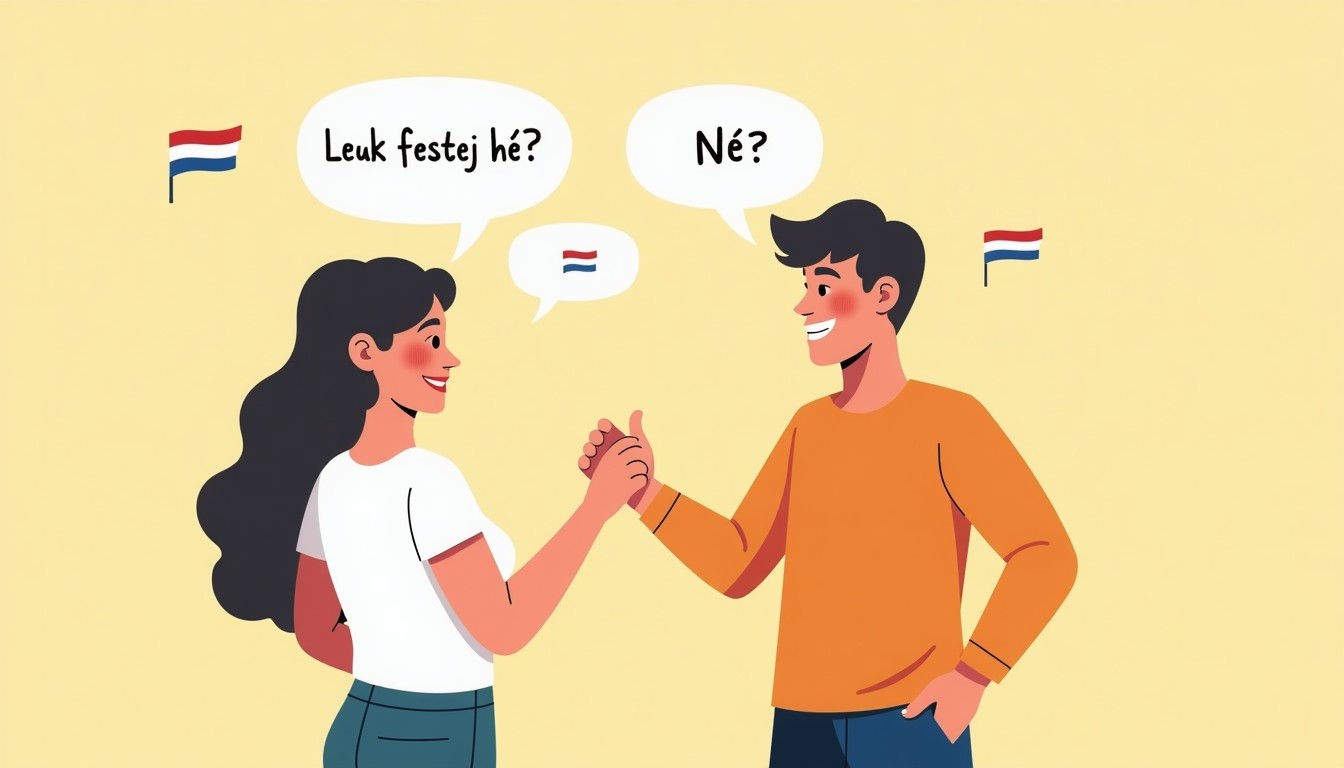
Pronunciation tip: it's like the he in help, but shorter and often with a glottal stop. Listen to how natives say it, and try to mimic the intonation.
Don't Overdo It
Like any good spice, hè should be used in moderation. If you tack it onto every sentence, you'll sound unsure. Aim for one or two per conversation, and you'll hit the sweet spot.
Want to practice? Try using hè with a language partner or in your own self-talk. You can also listen to Dutch podcasts to hear it in context. If you're looking for a structured way to train your ear, check out the Fluency Tulip for pronunciation drills.

The Bottom Line
Hè is a tiny word with a huge impact. It makes you sound more natural, builds connections, and adds emotion to your Dutch. So next time you're in a conversation, don't be afraid to let out a well-placed hè.
Stap voor stap, you'll get there. Goed bezig!
