
Imagine this: you're at a Dutch friend's house, and they offer you a second slice of appeltaart. You're full, but you want to be polite, so you say, "Oh, I couldn't possibly... but okay, just a small piece." You expect them to insist, right? Wrong. The tart is already back in the fridge before you finish your sentence. Welcome to the perplexing world of Dutch directness, where "no" means "no," and sometimes, bizarrely, "yes" means "no" too.
The Illusion of Politeness
Expats often struggle with Dutch directness. It's famous, right? But what's less talked about is the inverse: the Dutch indirectness when it comes to refusing things. We have a phrase that confuses learners constantly: "Ja, graag, maar..." (Yes, please, but...).
It sounds polite. It sounds like a yes. But it's a trap. Let's look at an example.
"Wil je nog een kopje koffie?" (Would you like another cup of coffee?)
"Ja, graag, maar ik moet eigenlijk gaan." (Yes, please, but I really have to go.)
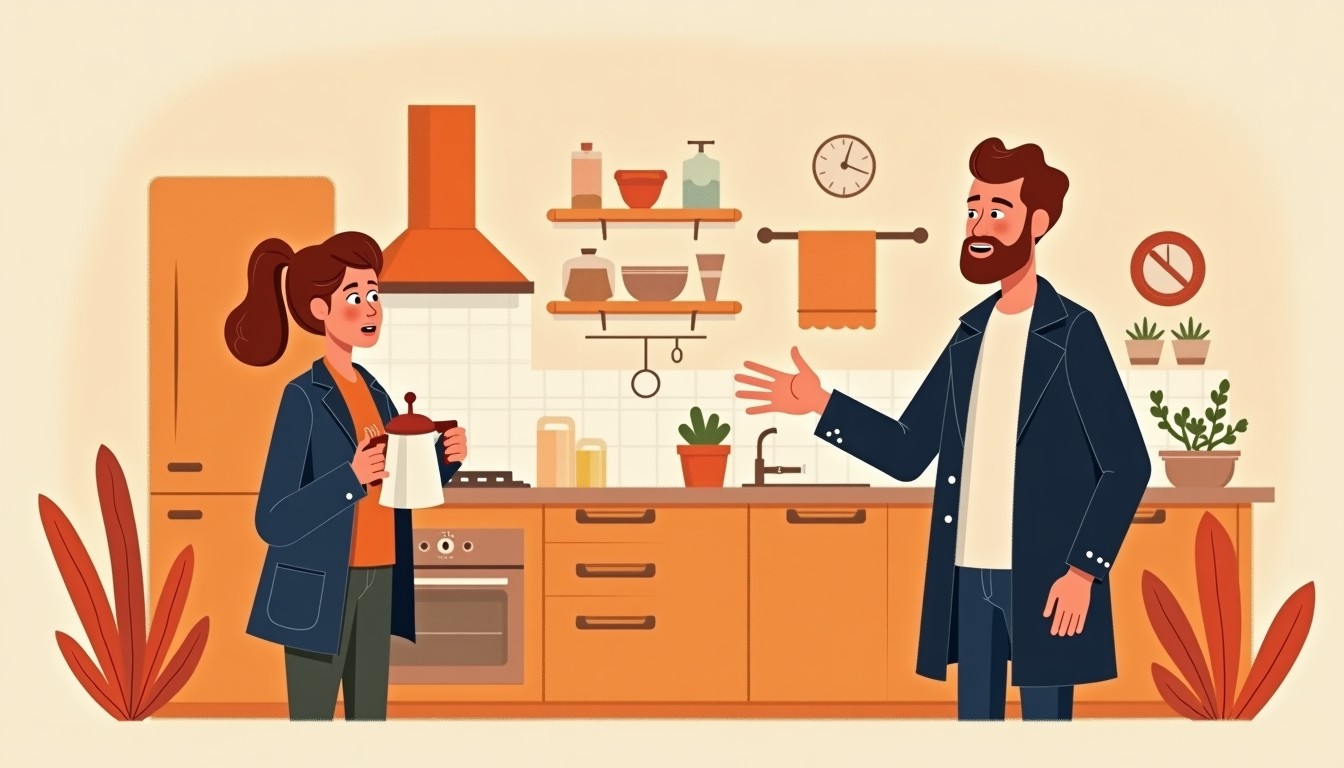
In English, this might imply you want the coffee quickly before leaving. In Dutch, it's a hard no. The "ja, graag" is merely a polite buffer before the rejection. It's the Dutch way of saying, "I appreciate the offer, but absolutely not."
The "Nee, Bedankt" Reality Check
This happens because, despite our reputation for bluntness, the Dutch actually dislike awkward social friction in casual settings. Saying a flat "nee" to a friendly offer feels a bit harsh, even to us. So we soften it. We say "yes" to the idea of the offer, but "no" to the reality of it.
This is where many learners stumble. They hear the "ja" and immediately start pouring the coffee, only to see their Dutch guest awkwardly shuffling towards the door.
Mastering the Subtle Rejection

So, how do you handle this? First, listen for the "maar" (but). The "maar" is the true answer. Everything before it is just social lubricant. If you want to practice picking up on these subtleties in real conversations, the Fluency Tulip is fantastic for ear training.
Second, don't be afraid to use the direct "nee, bedankt" (no, thanks) yourself. The Dutch respect clarity. If you don't want the coffee, just say no. It saves everyone time and prevents you from drinking five cups out of sheer politeness.
"Wil je nog een biertje?" (Do you want another beer?)
"Nee, bedankt. Ik heb genoeg gehad." (No, thanks. I've had enough.)
Simple, effective, and perfectly acceptable.

The "Misschien" Minefield
And then there's "misschien" (maybe). In some cultures, "maybe" is a gentle "no." In the Netherlands, "misschien" usually means "I haven't decided yet, but I'm leaning towards no, unless you can give me a very compelling reason." It's not a polite refusal; it's a genuine expression of doubt.
If you ask a Dutch colleague if they want to join you for lunch and they say "misschien," don't wait around for them. They are likely calculating their sandwich inventory and meeting schedule. If you want to get comfortable with these nuances, writing about your daily interactions in the Dagboek app and getting feedback can really help.
Learning Dutch isn't just about vocabulary; it's about decoding the cultural operating system. Keep listening, keep practicing, and next time someone says "ja, graag, maar..." you'll know exactly what to do. Put the cake away. Stap voor stap!
