
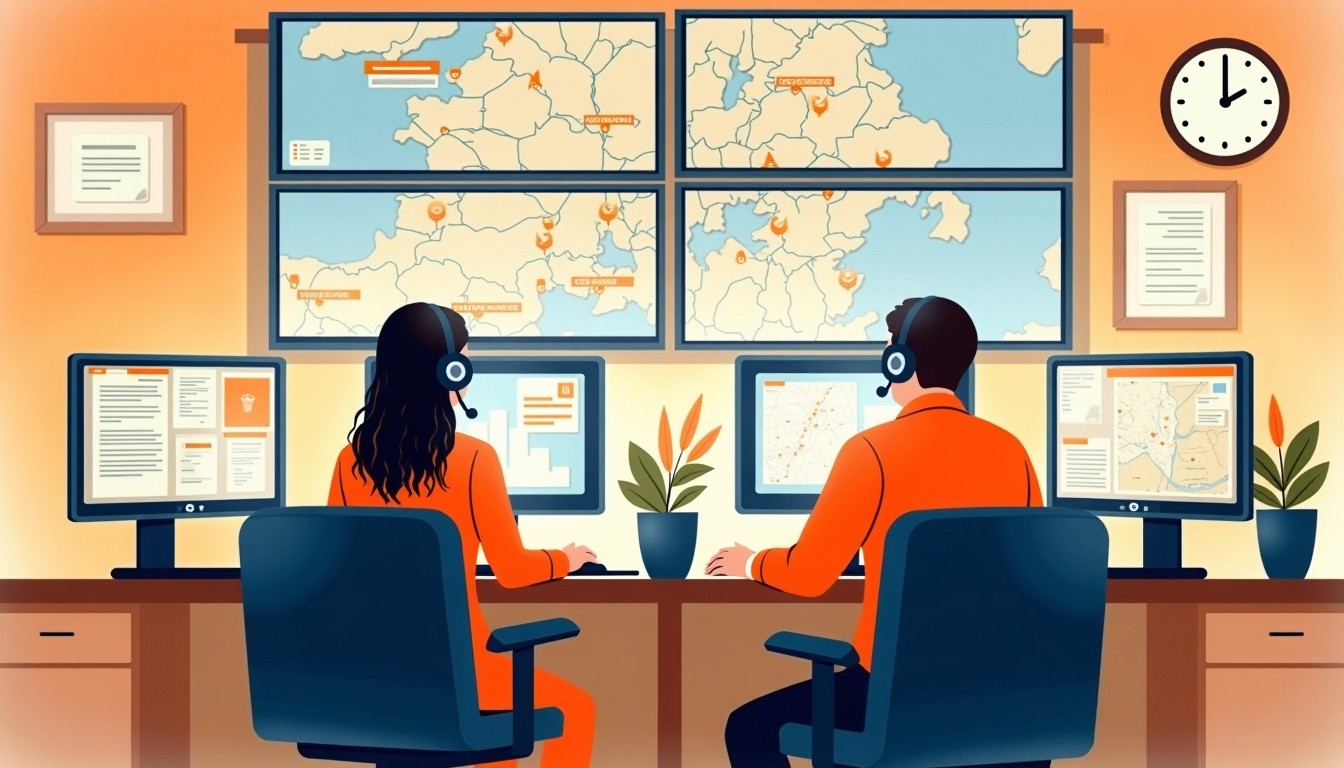
You call 112 in the Netherlands. A calm voice says, 'Meldkamer, wat is uw noodgeval?' (Emergency dispatch, what is your emergency?).
But here's the thing: meldkamer isn't just a room with phones. It's the nerve center of Dutch emergency services. And the word itself is a beautiful example of Dutch efficiency.
'Meldkamer' literally translates to 'report room' or 'notification room.' Melden means to report or notify. Kamer means room. Put them together and you get a single, precise word for a concept English needs a whole phrase to describe.
But meldkamer isn't just for emergencies. You'll hear it in other contexts too. For example, in a company, the meldkamer might be the security or help desk. In a building, it could be the reception area where you report your arrival.
So how do you use it? Simple:
- Bel de meldkamer. (Call the dispatch center.)
- De meldkamer stuurt een ambulance. (The dispatch center sends an ambulance.)
- Meld je bij de meldkamer. (Report to the help desk.)
Notice the verb melden comes back. That's no coincidence. Dutch loves building words from core verbs. Once you know melden, you unlock aangifte doen (file a report), vermelden (to mention), aanmelden (to register), and so on.
If you want to practice using words like meldkamer in real-life scenarios, try the Fluency Tulip for pronunciation drills. Or keep a Dagboek where you write about a fictional emergency call.
One common mistake learners make: they say 'Ik bel de meldkamer' but forget to use the correct preposition. It's 'bel naar de meldkamer' or simply 'bel de meldkamer'. No extra preposition needed.
So next time you hear meldkamer, remember: it's not just a room. It's a system. A word. A piece of Dutch culture that makes you sound like you know what's up.
Goed bezig! Stap voor stap word je vloeiend.