
Imagine you're at a festival, and your friend says, "Ik ga mooi weer rijden met de bus." You might think, "Great, the weather is nice, let's take the bus." But then you realize he doesn't have a ticket. He's not talking about the weather at all. He's planning to ride for free, hoping the conductor won't check. That's mooi weer rijden. And yes, it's as cheeky as it sounds.
So what's going on here? Literally, mooi weer means "nice weather," and rijden means "to ride" or "to drive." But together, mooi weer rijden is an idiom that means to freeload or take advantage of something without paying. It's not about the weather at all; it's about the audacity.
The origin? Some say it comes from the idea that when the weather is nice, you might be tempted to hop on a tram or bus without a ticket, because who's going to check on a sunny day? Others link it to the old practice of "riding the rails" for free. Either way, it's a classic Dutch expression that captures that mix of frugality and rule-bending that outsiders often find both charming and baffling.
You'll hear it in various contexts. For example, if someone always lets others pay for drinks, you might say, "Hij rijdt weer mooi weer." Or if you sneak into a museum without paying, you're mooi weer aan het rijden. It's not necessarily malicious; sometimes it's said with a wink, as if to say, "Look at me getting away with it."
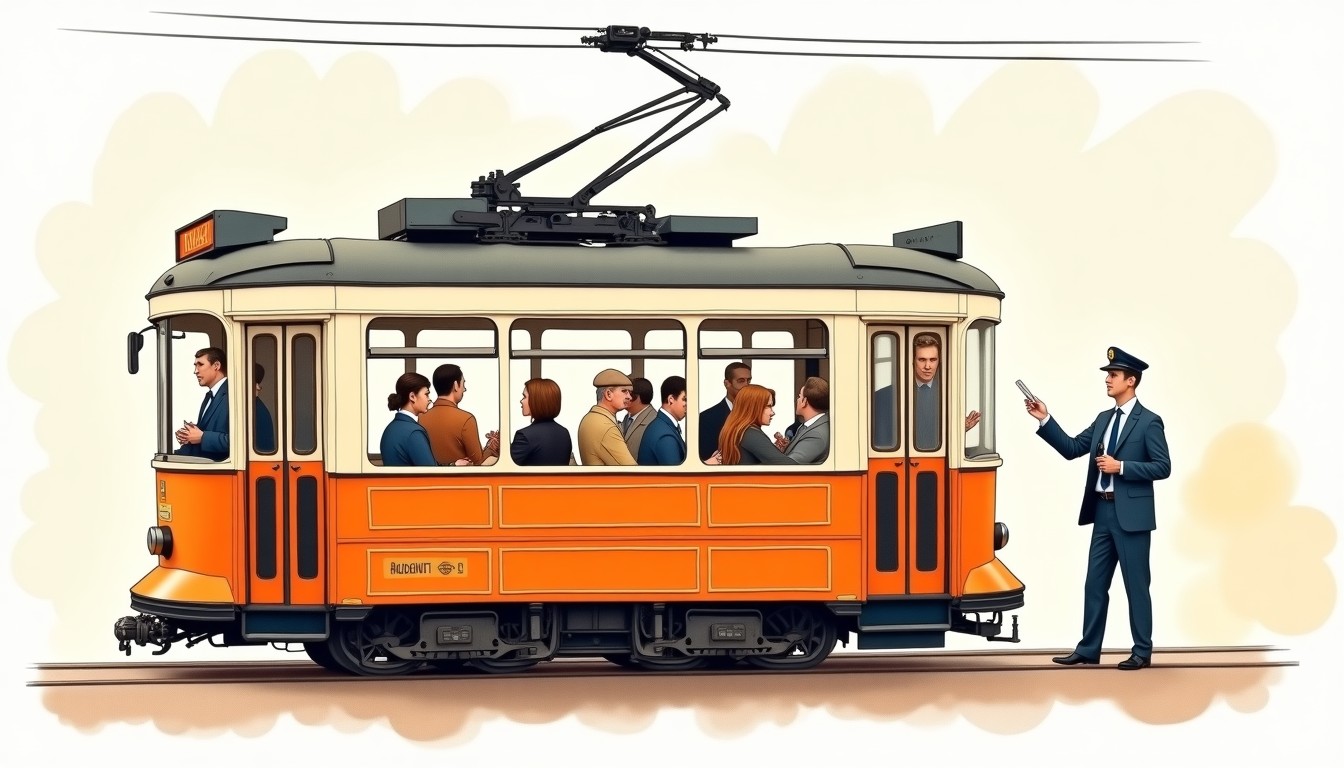
But be careful: using it about yourself might come across as proud of cheating. The Dutch generally value fairness, so while they might joke about it, they also expect you to pay your share. It's a fine line between being clever and being a profiteur (profiteer).
If you want to practice using this phrase in context, try writing a short dialogue in Dagboek, our Dutch diary app. You can write in any language, and we'll help you turn it into natural Dutch with audio. It's a great way to internalize idioms like this.
Another situation: public transport. In the Netherlands, you must check in and out with your OV-chipkaart. If you forget to check out, you might be accused of mooi weer rijden. Not a good look. So always double-check.
Now, let's look at some variations. You might also hear zwartrijden, which specifically means riding without a ticket. But mooi weer rijden is broader; it can apply to anything where you get something for nothing. For instance, if you attend a concert without a ticket, you're mooi weer aan het rijden. It's a colorful way to describe a cheeky act.

Why does this matter for language learners? Because idioms like this reveal cultural attitudes. The Dutch have a reputation for being direct and frugal, but they also have a sense of humor about bending the rules. Understanding mooi weer rijden helps you grasp that nuance. It's not just about vocabulary; it's about seeing the world through Dutch eyes.
If you're looking to build your vocabulary through reading, check out our DFL Reading Method. It's designed to help you pick up words and expressions naturally, just like this one.
So next time you hear someone say they're going to mooi weer rijden, you'll know they're not commenting on the weather. They're planning to get something for free. And who knows, maybe you'll be tempted to try it yourself. Just don't get caught.
Goed bezig! Keep exploring these quirky expressions, and you'll sound more Dutch every day.
Frequently Asked Questions
Is 'mooi weer rijden' only about public transport?
No, it can refer to any situation where you get something without paying, like sneaking into an event or letting others pay for you.
Can I use it in formal situations?
It's informal and often used humorously, so avoid it in formal writing or speech unless you're sure of the tone.

What's the difference between 'mooi weer rijden' and 'zwartrijden'?
'Zwartrijden' specifically means riding public transport without a ticket, while 'mooi weer rijden' is broader and can apply to any free ride.
Vocabulary
| Dutch | English | Example |
|---|---|---|
| mooi weer rijden | to freeload, to ride for free | Hij rijdt altijd mooi weer in de trein. |
| profiteur | profiteer | Wat een profiteur, hij betaalt nooit mee. |
| zwartrijden | to ride without a ticket | Zwartrijden is strafbaar. |
| OV-chipkaart | public transport card | Vergeet niet in te checken met je OV-chipkaart. |
| checken | to check in/out | Ik moet nog uitchecken. |
| gratis | free | De toegang is gratis. |
| betrapt worden | to get caught | Hij werd betrapt zonder kaartje. |
| de conducteur | the conductor | De conducteur controleert de kaartjes. |
| de tram | the tram | We nemen de tram naar het centrum. |
| de bus | the bus | De bus komt over vijf minuten. |
| de trein | the train | De trein naar Amsterdam is vertraagd. |
| meeliften | to ride along, to piggyback | Hij lift mee met zijn vriend. |
| de kaartje | the ticket | Ik heb geen kaartje gekocht. |
| de boete | the fine | Je krijgt een boete als je zwartrijdt. |