
Imagine this: You're at a friend's birthday party in Amsterdam. You compliment their vintage bicycle. They smile and say, 'Oh, die kun je wel lenen.' You think, 'Great, I can borrow it!' But then they add, 'Maar dan moet je hem wel terugbrengen.' Wait, what? Did they just say I have to bring it back? Of course I would! Why are they acting like I might steal it?
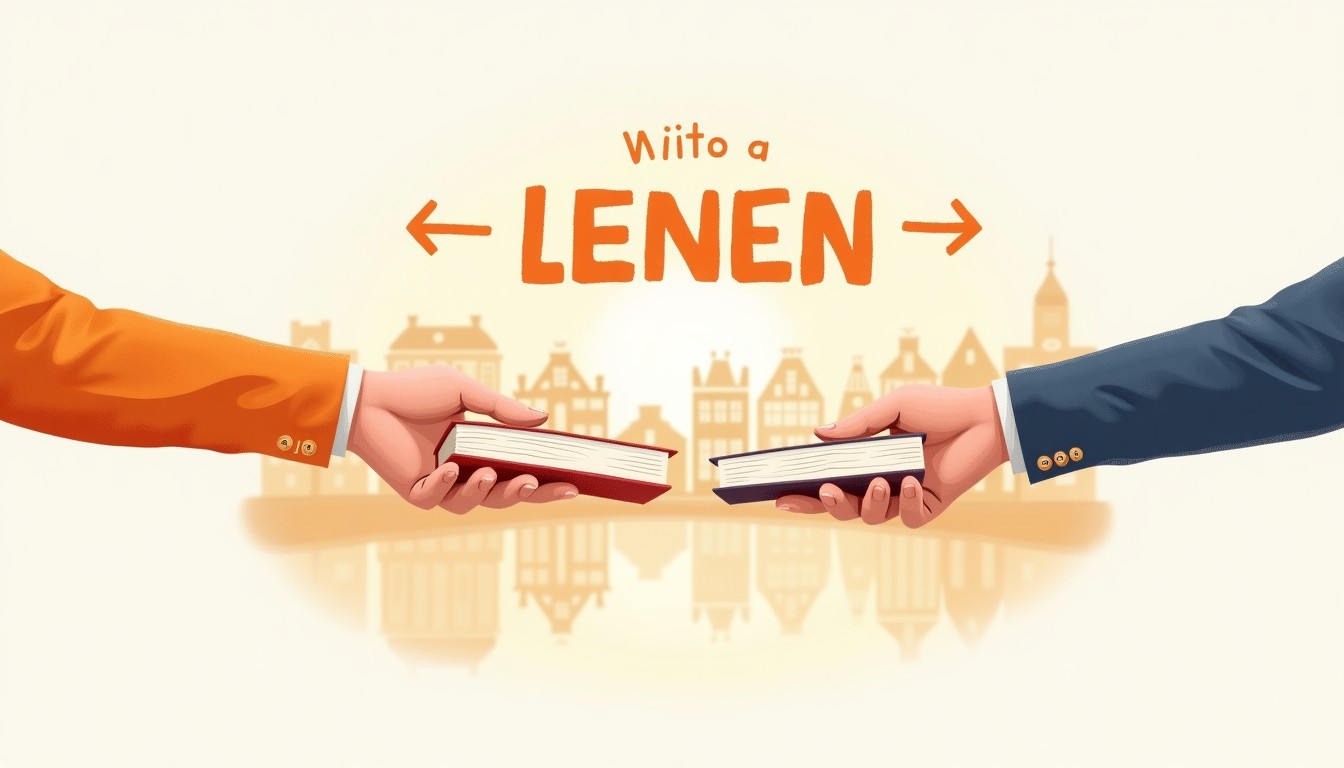
Welcome to the wonderful world of lenen, the Dutch verb that means both 'to borrow' and 'to lend'. Yeah, you read that right. One word, two directions. And it trips up expats almost every day.
In English, we're spoiled. We have 'borrow' (take) and 'lend' (give). Clear. Simple. But Dutch? Nope. Lenen covers both. The direction is implied by context, prepositions, or just... vibes. So when your Dutch friend says 'Ik leen je mijn fiets,' they mean 'I lend you my bike.' But if you say 'Ik leen je fiets,' you mean 'I borrow your bike.' Same verb, opposite meaning. Confusing? Absolutely. But also kind of beautiful once you get it.
Why the Dutch Do This
Dutch is a language of efficiency. Why have two words when one will do? The Dutch love to streamline. Think of gezellig (cozy), lekker (tasty), doen (do). They pack meaning into simple packages. Lenen is no exception. The context does the heavy lifting. If you're holding the object, you're borrowing. If you're handing it over, you're lending. The verb stays the same.
But here's where it gets tricky: Dutch also uses lenen for borrowing money. 'Ik leen geld van de bank' means 'I borrow money from the bank.' But 'De bank leent geld aan mij' means 'The bank lends money to me.' See the prepositions? Van (from) signals borrowing. Aan (to) signals lending. That's your secret decoder ring.

So next time you're at a Dutch friend's house and they offer to lenen you something, pay attention to the preposition. Or just ask: 'Bedoel je dat ik het mag lenen of dat jij het uitleent?' (Do you mean I can borrow it or that you're lending it out?) They'll appreciate your precision.
The Expat Trap: Assuming It's Like English
Most expats learn 'borrow' and 'lend' early on. Then they meet lenen and try to map it directly. 'I borrow' becomes 'Ik leen' and 'I lend' also becomes 'Ik leen'. But then they mix up the prepositions. They say 'Ik leen aan jou' when they mean 'I borrow from you.' Or 'Ik leen van jou' when they mean 'I lend to you.' And suddenly, they've accidentally told their friend they're borrowing their car when they meant to offer theirs. Awkward.
The fix? Learn the prepositions as a package. Lenen van = borrow from. Lenen aan = lend to. Drill them together until they stick. You can practice with Fluency Tulip, our pronunciation and listening app, which has real podcast clips using these phrases in context. Hearing them over and over will wire your brain for the right preposition.
Another trick: think of the direction of the object. If it's coming to you, use van. If it's going away, use aan. Visualize the flow. It's like a little arrow in your head.
Real-Life Examples
Let's see lenen in action:
- Ik leen een boek van de bibliotheek. (I borrow a book from the library.)
- Zij leent haar auto aan haar broer. (She lends her car to her brother.)
- Kun je me tien euro lenen? (Can you lend me ten euros?)
- Ik heb geld geleend van mijn ouders. (I borrowed money from my parents.)
Notice how the past tense geleend works the same way. And yes, 'Kun je me tien euro lenen?' is ambiguous. It could mean 'Can you lend me ten euros?' or 'Can you borrow ten euros for me?' But context usually makes it clear. If you're asking for money, it's lend.
How to Master Lenen (Without Losing Friends)
First, accept that lenen is a two-way street. Don't fight it. Embrace the ambiguity. Then, practice with prepositions until they're automatic. Write sentences. Say them out loud. Use them in conversation. If you have a Dutch friend, ask them to correct you. They'll be happy to help, and they'll probably find your confusion adorable.
For structured practice, try our Dagboek app. You write a short diary entry in any language, and it comes back in Dutch with audio. You can write about borrowing things, lending things, and see how the prepositions work in real sentences. It's like having a patient Dutch teacher in your pocket.
And if you want to dive deeper into Dutch verbs and their quirks, check out our Email Training. You get daily exercises in your inbox, so you can build a routine and master these tricky words step by step.
Beyond Lenen: Other Dutch Verbs That Play Both Sides
Lenen isn't the only Dutch verb that does double duty. Here are a few more to watch out for:

- Huren means both 'to rent' and 'to hire'. Context decides.
- Vragen means 'to ask' but can also mean 'to request' or 'to demand'.
- Sturen means 'to send' but also 'to steer'.
Dutch is full of these flexible verbs. Once you accept that, you'll stop expecting one-to-one translations and start thinking in Dutch. That's when fluency kicks in.
Your Turn
Next time you need to borrow something, try using lenen with the right preposition. Start with lenen van for borrowing. Then try lenen aan for lending. Practice with a friend or in your diary. And don't worry if you mix them up at first. Every Dutch learner does. The important thing is to keep using them.
Goed bezig! Je bent al een stap verder dan gisteren. (You're already a step further than yesterday.)