
There is a Dutch verb that English simply cannot translate. Not because the concept is exotic, but because English speakers have never needed it. The verb is buurten.
You will not find it in most beginner textbooks. It rarely appears in NT2 exam materials. And yet, if you live in the Netherlands for more than a few months, you will hear it. You might hear it from a neighbor leaning over the fence. You might see it in a WhatsApp group for your street. You might even be invited to do it without realizing that is what you are doing.
Buurten means something like to spend time with your neighbors in a casual, unhurried way. It is not quite visiting. It is not quite hanging out. It sits somewhere between a chat over the hedge and a spontaneous barbecue on the sidewalk. It is the social glue of Dutch residential life, and understanding it will change how you experience your own street.
What Buurten Actually Means
The noun de buurt means the neighborhood. That much you probably know. But the verb buurten turns that place into an action. To buurten is to actively be a neighbor, not just to have one.
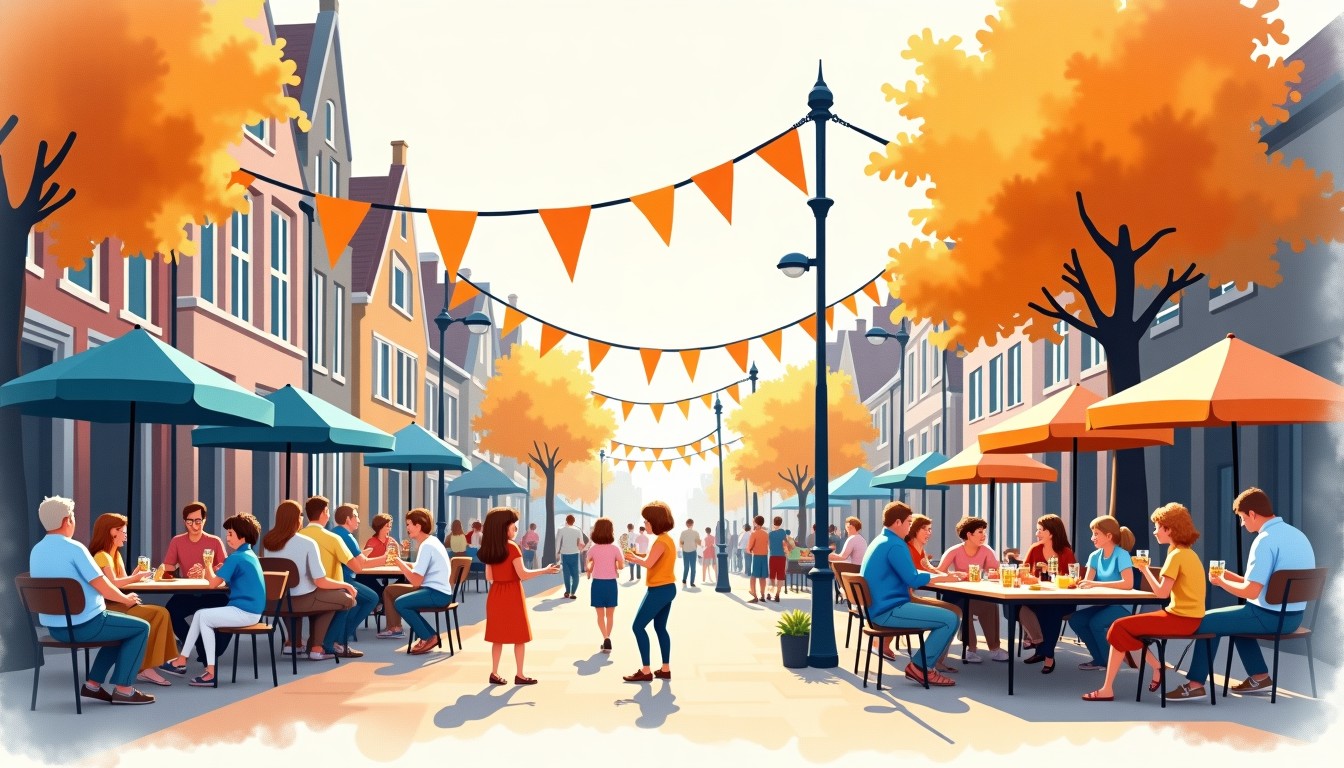
When Dutch people say We gaan even buurten, they mean they are going to stand at the fence, or sit on a stoop, or lean against a car, and talk about nothing in particular for twenty minutes. The subject might be the weather, the new family moving in at number 14, or the fact that the gemeente still has not fixed the streetlight. The point is not the content. The point is the contact.

This is why buurten can feel so foreign to expats from cultures where neighbors are politely ignored. In many English-speaking countries, standing outside and chatting with a neighbor for no reason would be considered odd, or at least inefficient. In the Netherlands, it is considered normal. It is considered gezellig, even. It is how a street becomes a community instead of a collection of separate houses.
If you are new to the Netherlands, this is one of the fastest ways to feel at home. You do not need perfect Dutch to buurten. You need presence. You need to be outside, visible, and open to a short conversation. That is all.
This is exactly where an app like Dagboek helps: you write about your day in any language, and you get corrected Dutch back, with audio. If you buurt with your neighbor and want to remember the words they used, you can write about it that evening. The next time, you will have the vocabulary ready.
Why Buurten Matters for Your Dutch
Language learners often separate learning Dutch from living in Dutch. They study at the kitchen table, then close the book and switch back to English the moment they step outside. Buurten collapses that separation.

When you buurt, you are practicing Dutch in the most natural context possible: your own street, with people who already know you live there. There is no performance pressure. Your neighbor is not grading you. They are just happy you are making an effort. And because the conversation is short and repetitive, you will hear the same phrases again and again. Hoe gaat het? Lekker weertje, hè? Heb je het al gehoord van nummer 14? These phrases stick because they are tied to a person and a place.
This is the same principle behind the DFL Reading Method, which builds comprehension by anchoring words to real contexts rather than isolated lists. Buurten is that method, but with your feet on the sidewalk.
There is also a confidence benefit. Many learners feel anxious about speaking Dutch because they fear making mistakes in front of strangers. But a neighbor is not a stranger. They are someone you will see again tomorrow. That slight familiarity lowers the stakes. You can try a sentence, mess it up, laugh, and try again. Over time, those small interactions add up to real fluency.
If you want to accelerate this, consider using Email Training to practice the kinds of sentences that come up in neighborly conversations. Short, practical, repeatable. The kind of Dutch you actually need when you are standing at the fence.
How to Start Buurten Today
The good news is that buurten requires almost no preparation. You do not need a special occasion. You do not need an invitation. You just need to be outside when your neighbors are.
Here are a few practical ways to begin:
- Take your coffee outside. If the weather allows, sit on your stoop or stand in your front garden. Dutch neighborhoods are full of people doing exactly this. You will not be the only one.
- Learn three opening lines. You only need a handful of phrases to start. Goedemorgen, alles goed? Lekker weertje, hè? Drukke dag vandaag? These are low-risk and almost always get a friendly response.
- Ask about the neighborhood. People love to talk about their street. Weet u wanneer de groene container wordt opgehaald? or Is het altijd zo rustig hier? These questions are practical and open the door to more conversation.
- Do not rush away. Buurten is not a transaction. It is not a quick hello before you get to the real business of your day. It is the real business. Give it five minutes. Let the silence sit if it comes. That is part of it.
- Write it down afterward. When you get back inside, jot down any words or phrases you did not understand. This is where Dagboek shines again. You can write a short entry about the conversation, and get corrected Dutch back the next morning.
If you are at the A1 or A2 level, you might feel like you do not have enough Dutch to buurten. But that is not true. Buurten is not about complex sentences. It is about showing up. A simple Hallo, ik ben [name], ik woon hier nu drie maanden is enough to start. Your neighbor will meet you where you are.
For those preparing for the inburgering or NT2 exams, buurten is also surprisingly good practice. The speaking and listening sections test your ability to handle everyday interactions, and there is no more everyday interaction than talking to the person next door. You can supplement this with structured practice using the NT2 Trainer, which drills the exact kinds of conversations you will have in the exam. But the real-world version is buurten.

And if you are looking for a way to build a daily habit around this, a simple 10-minute email exercise can keep you sharp between conversations. The Email Training app sends you short Dutch exercises that fit into your morning coffee. By the time you step outside, you are warmed up.
The Deeper Value of Buurten
There is a reason Dutch people value buurten so much. It is not just about being friendly. It is about building a neighborhood that functions. When you know your neighbors, you are more likely to help each other. You water plants when someone is on holiday. You sign for a package. You keep an eye on things. You create a street that feels safe and alive.
For expats, this can be one of the most rewarding parts of life in the Netherlands. It is also one of the most accessible. You do not need to be fluent. You do not need to understand every word. You just need to be willing to stand still for a few minutes and let the conversation happen.
So the next time you see your neighbor outside, do not just wave and walk past. Stop. Say something. Ask about the weather. Compliment their garden. Ask if they know when the street cleaning is. That is buurten. And it might just be the best Dutch lesson you have all week.