
You're standing in line at the Albert Heijn. The person in front of you pulls out a small, leather-bound book, flips it open, and starts scribbling. You glance over. It's not a novel. It's not a diary. It's an agenda. And it's the most Dutch thing you'll see today.
I'm not talking about a digital calendar. I mean a physical, paper agenda. The kind with a ribbon bookmark and a week spread across two pages. Dutch people love them. They carry them everywhere. And if you want to understand Dutch culture (and pick up some language along the way), you need to understand the agenda.
Why the agenda is sacred
In the Netherlands, spontaneity is nice, but planning is holy. Dutch social life runs on appointments. Want to have coffee with a friend? That goes in the agenda. Need to call your mother? Agenda. Even relaxation gets scheduled. I'm only half joking.
This isn't because Dutch people are stiff. It's because they value your time and theirs. If you say We moeten snel een keer afspreken (We should meet up soon) without proposing a date, you'll often get a polite smile and nothing else. But if you pull out your agenda and say Ik kan dinsdag om drie uur (I can do Tuesday at three), suddenly you're speaking their language.
The agenda is a social tool. It shows you're serious. It shows you respect their schedule. And it gives you a perfect excuse to practice Dutch: Zal ik het in mijn agenda zetten? (Shall I put it in my agenda?)

How to use the agenda to learn Dutch
Here's the fun part: your agenda can become a language learning device. Every time you write an appointment, write it in Dutch. Not dentist but tandarts. Not birthday party but verjaardag. You'll see those words repeatedly, and repetition is how you learn.
Better yet, use your agenda to schedule Dutch practice. Block out 15 minutes a day for a podcast or a quick drill. Treat it like any other appointment. If it's in the agenda, it happens. That's the Dutch way.
If you want to make those 15 minutes count, the Fluency tools are a good place to start. Or if you're not sure where you stand, take the free assessment to see your level.
The vocabulary of planning

Dutch is full of useful words around scheduling. Here are a few you'll hear constantly:
- afspreken - to make an appointment or date
- de agenda - the calendar (paper or digital)
- een gaatje - a free slot (literally "a little hole")
- volgeboekt - fully booked
- verzetten - to reschedule
- bevestigen - to confirm
Try using these in your next text message. Instead of Kan ik langskomen? (Can I come by?), say Heb je nog een gaatje deze week? (Do you have a free slot this week?). It sounds more natural and shows you understand the culture.
The expat trap
Many expats complain that Dutch people are hard to befriend. They invite a Dutch colleague for a drink, get a friendly Ja, gezellig! and then never hear back. The missing piece? The agenda. A Dutch person saying Ja, gezellig without a date is like a Facebook invite without a time. It's a nice sentiment, not a plan.
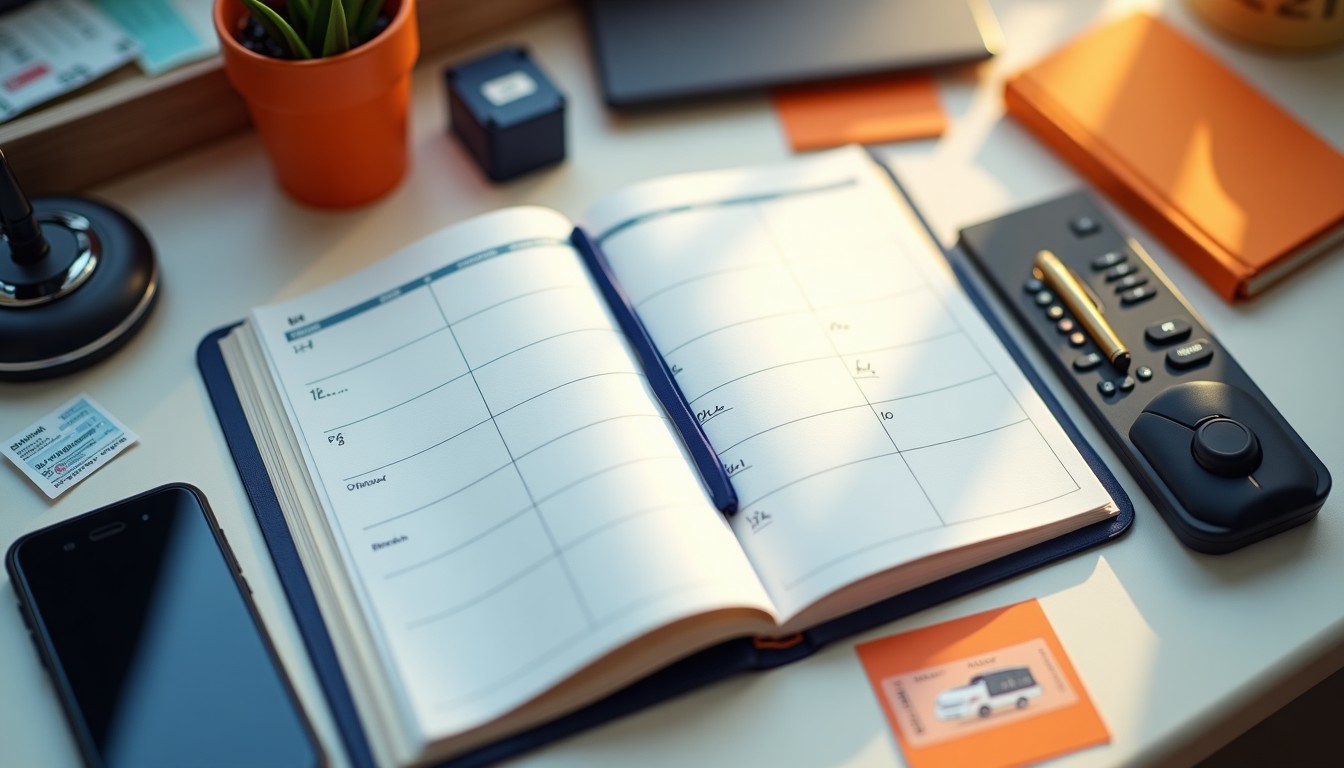
So next time, be the one who proposes a concrete time. Zullen we vrijdag om vijf uur borrelen? (Shall we grab a drink Friday at five?) Watch how quickly that gezellig turns into a real appointment.
Your homework
This week, buy a small agenda. Yes, a paper one. Write three Dutch words in it. Schedule one Dutch practice session. And make one real appointment with a Dutch speaker. Then tell me how it went. Stap voor stap, je komt er wel.
If you want more structure, the free trial gives you a week of daily exercises. Goed bezig, blijf oefenen!