
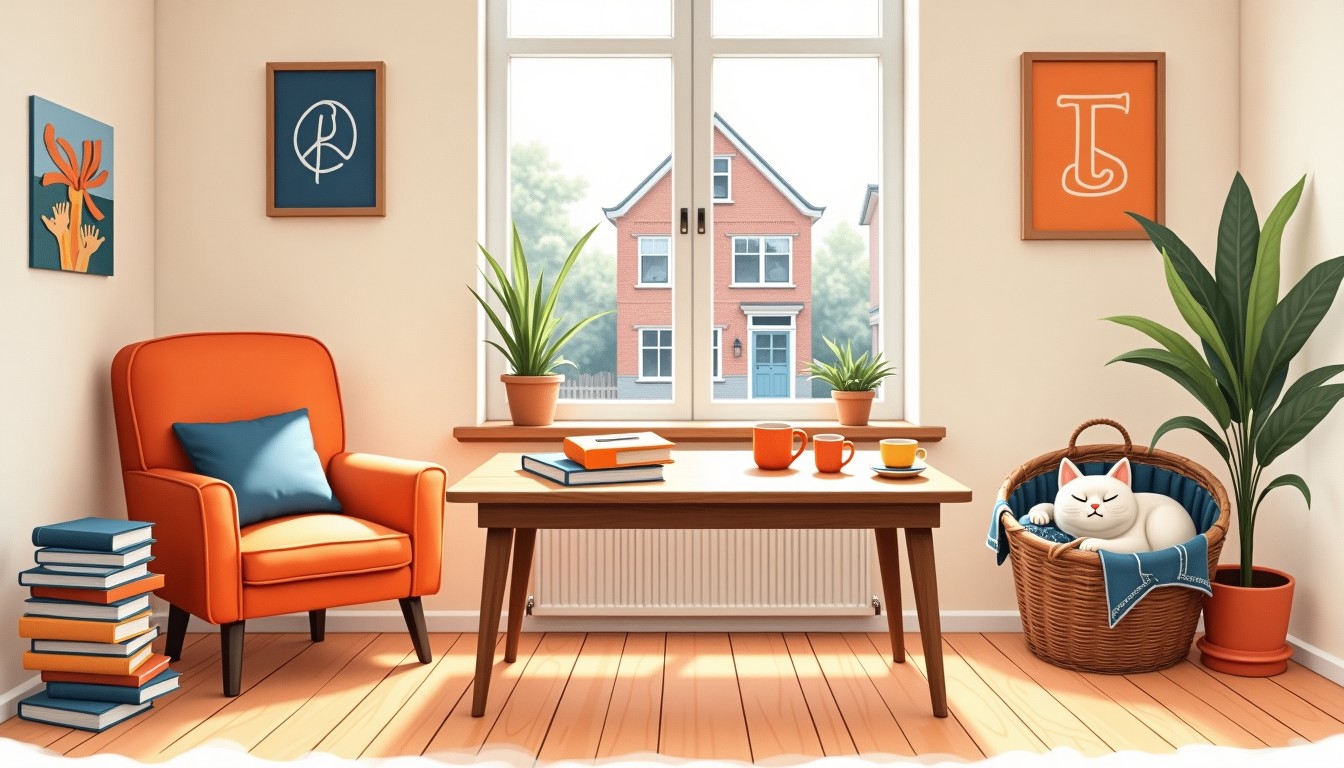
You walk into a Dutch friend's house for the first time. There are books stacked on the floor, a half-finished puzzle on the dining table, three coffee cups on the windowsill, and a cat asleep in a laundry basket. You think: this place is a mess. Your friend beams and says: 'Het is hier een beetje rommelig, hè?' And you realize, with a jolt, that she is not apologizing. She is proud.
Welcome to rommelig, one of those Dutch words that sounds like an insult but functions like a hug. It means messy, cluttered, untidy. But in Dutch culture, it also means lived in. It means real. It means nobody staged this place for a magazine shoot.
Why 'Rommelig' Is Not an Insult
In many cultures, a messy home is a confession. You apologize for it. You blame the kids, the dog, the week. In the Netherlands, rommelig is often delivered with a shrug and a smile. It is not a flaw. It is evidence of life happening.
This is the same country that gave us doe maar gewoon (just act normal) and gezellig (cozy togetherness). Rommelig fits right in. A perfectly tidy house can actually feel a little cold here. A rommelig house feels warm. It feels like someone actually lives there, drinks coffee there, argues about the dishwasher there.
If you want to see this in action, the Dagboek app is perfect for writing about your own observations of Dutch daily life, mess and all.
The Grammar Bit (Don't Panic)
Rommelig is an adjective. It describes nouns. But it comes from the noun rommel, which means junk, clutter, or mess. And rommelen is the verb: to rummage, to fiddle, to make a mess. One little word family, three useful tools.
Examples:
- Mijn kamer is altijd rommelig, maar ik weet waar alles ligt. (My room is always messy, but I know where everything is.)
- Hij rommelt wat in de keuken. (He is rummaging around in the kitchen.)
Notice the tone. There is no shame in either sentence. That is the whole point.
How to Use It Without Sounding Rude

Here is the tricky part for learners. Calling someone else's space rommelig can still land badly if your tone is off. The Dutch use it mostly about their own stuff, or about shared spaces with a wink. If you want to play it safe, add a softener:
- Het is hier lekker rommelig. (It is nicely messy here.)
- Een beetje rommelig, maar wel gezellig. (A bit messy, but cozy.)
That little lekker or gezellig changes everything. It turns observation into appreciation.
If you want to practice this kind of nuance, the Fluency Tulip is a great place to train your ear for tone and rhythm in real Dutch speech.
Rommelig vs. Other Messy Words
Dutch has a few words for mess, and they are not interchangeable.
- Rommelig: messy in a cozy, human way. A desk with papers. A room with clothes on a chair.
- Chaotisch: chaotic. More intense. Plans falling apart. Actual stress.
- Vuil: dirty. Actual dirt. Not cozy at all.
So when a Dutch person says their house is rommelig, they are not saying it is dirty. They are saying it is alive. Big difference.
Why This Matters for Your Dutch
Learning a language is not just vocabulary. It is learning what a culture values. Rommelig tells you that the Netherlands does not worship perfection. It worships authenticity. It prefers the real thing over the polished thing.
That is good news for you. Your Dutch does not need to be perfect. It needs to be real. It needs to be used. A rommelig sentence that communicates is worth more than a perfect sentence you never say out loud.

If you are looking for a structured way to build that real, messy, daily practice, the Email Training is a solid place to start.
Try It This Week
Next time you are in a Dutch home, a cafe, or a workspace that is not perfectly arranged, try saying: Het is hier rommelig, maar wel lekker. Watch the reaction. You will probably get a smile, not a frown.
And if your own desk looks like a small explosion of notes and coffee cups while you study Dutch, congratulations. You are doing it right.
Goed bezig. Keep going. Stap voor stap.
